



The Strategic Guide to Sourcing Direct from China Generator Manufacturers
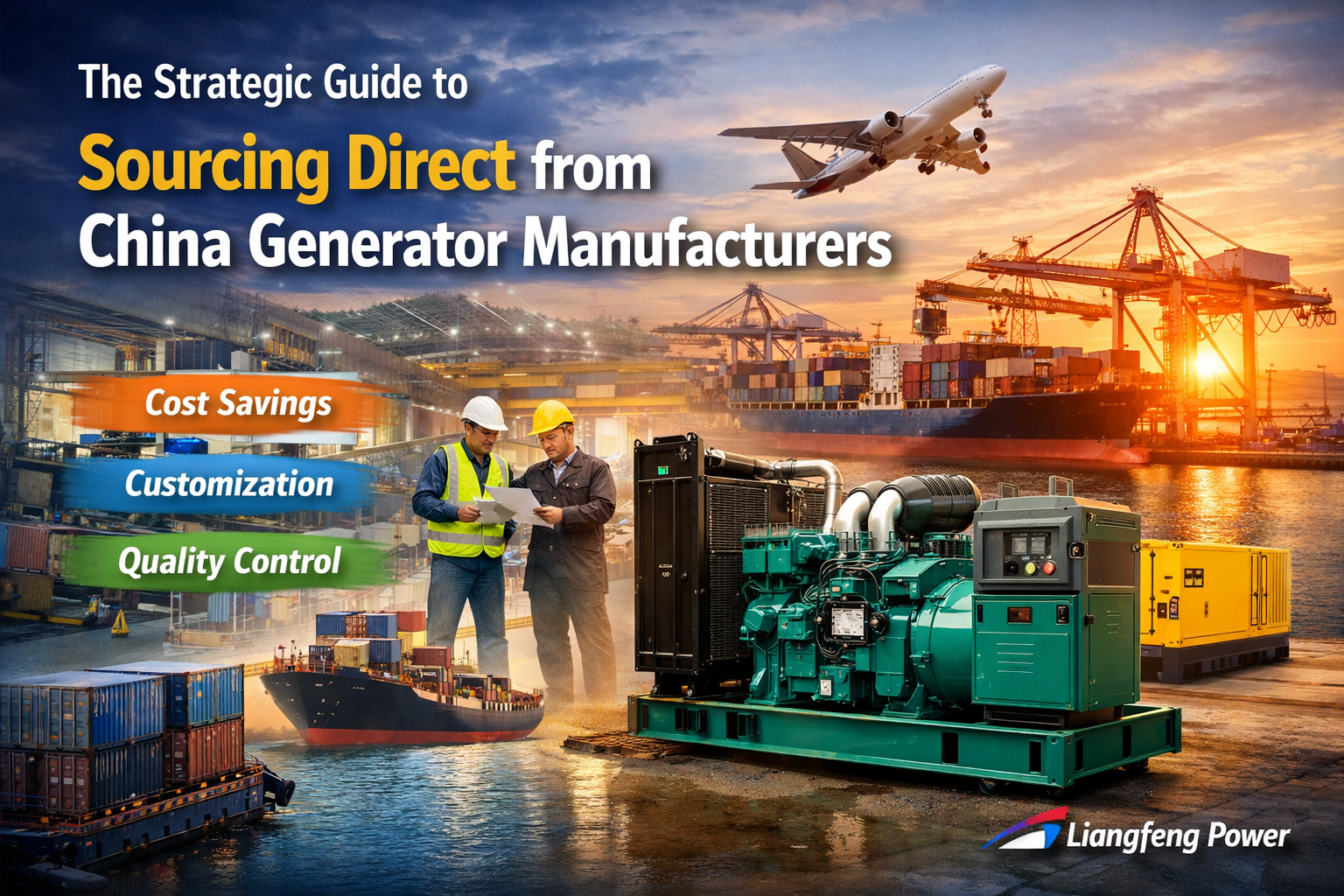
Sourcing power generation equipment is one of the most significant investments a business can make. Whether you are an industrial distributor or a project manager for a large-scale construction site, the decision to move away from middle-men and go straight to the source is a strategic shift. When you connect directly with China generator set manufacturers, you aren't just buying a machine; you are entering a technical partnership with leading industrial power equipment manufacturers.
This guide explores the intricate landscape of factory-direct sourcing, ensuring you understand how to navigate production lines, compliance, and customization to secure the best ROI for your enterprise.
The Benefits of Direct Factory-to-Business Sourcing
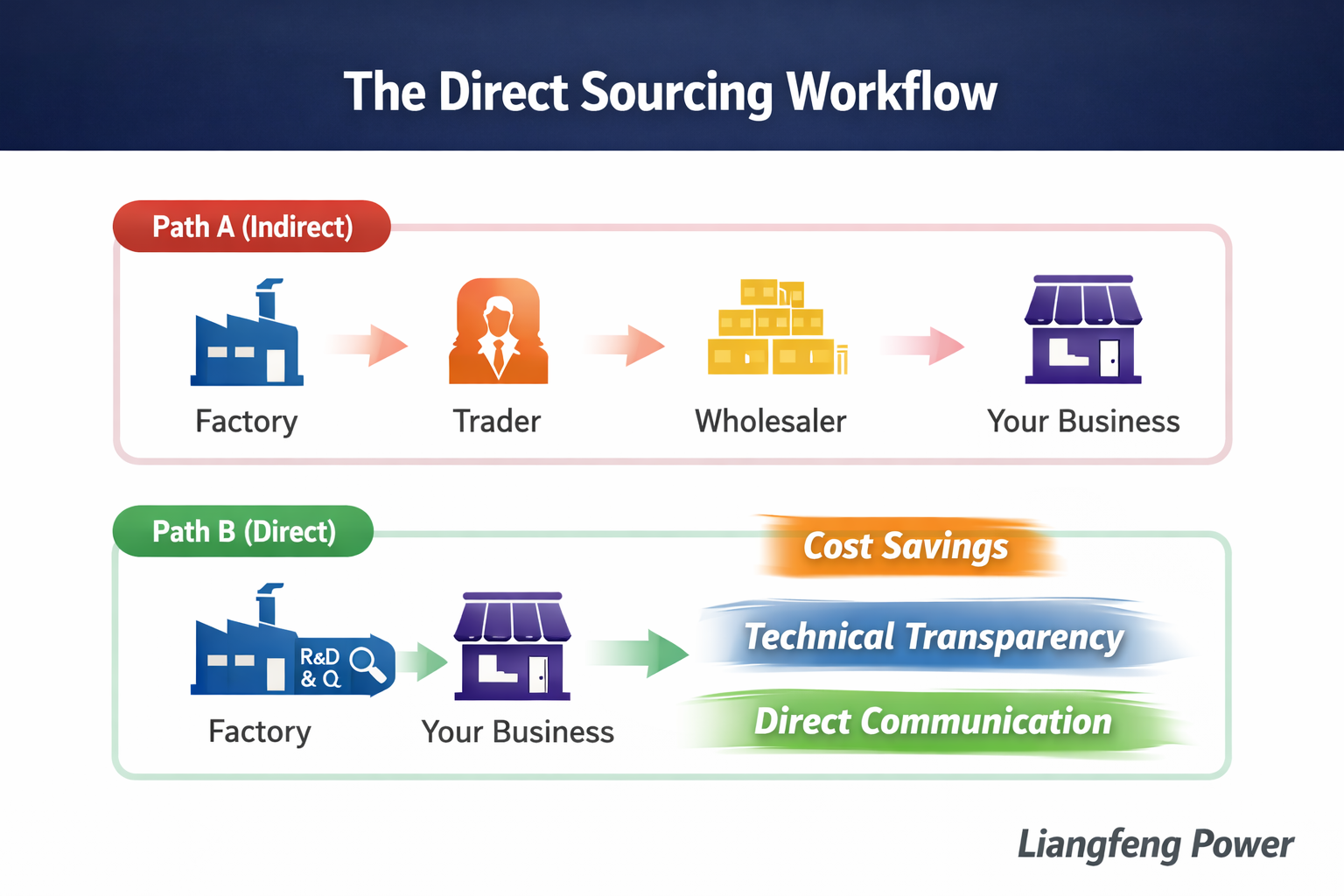
The traditional supply chain often involves multiple layers of trading companies and wholesalers. While these entities provide convenience, they also add a "margin layer" that increases costs without necessarily adding technical value. Transitioning to a factory-to-business (F2B) model changes the dynamic of your procurement. By speaking directly to the engineers and production managers, you eliminate the risk of miscommunication that often happens through third-party agents.
Direct sourcing allows for a transparent view of the supply chain. You gain insights into the raw materials being used—such as the grade of copper in the alternator or the specific alloy used in the engine block. This level of transparency is vital for long-term reliability. Furthermore, the cost savings realized from avoiding intermediary fees can be reinvested into higher-spec components, such as better control panels or superior soundproof enclosures, giving your business a competitive edge in your local market.
Accessing OEM and ODM Customization Services
One of the most compelling reasons to work directly with a manufacturer is the ability to utilize Original Equipment Manufacturing (OEM) and Original Design Manufacturing (ODM) services. In the generator industry, a "one size fits all" approach rarely works for specialized industrial needs. Every region has different requirements regarding voltage, frequency, and environmental conditions. This level of factory access is particularly crucial when deciding between fuel types, allowing you to partner with a specialized China gas generator sets manufacturer to develop low-emission units for urban or indoor industrial projects.
Tailoring Specifications for Harsh Environments
When you work with a factory, you can request specific modifications. For instance, if your project is located in a high-altitude area or a coastal region with high salinity, a standard generator might fail prematurely. Direct manufacturers can customize the cooling systems or apply anti-corrosion coatings during the assembly process. This level of deep customization is usually unavailable or prohibitively expensive when dealing with stock-holding traders. You become the architect of the product, ensuring that the final unit meets the exact demands of your end-users.
Ensuring Technical Compliance at the Source
Compliance is the backbone of the power generation industry. A generator that does not meet local emissions standards or electrical safety codes is a liability, not an asset. When you source directly from the generator factory, you can verify compliance at the "point of origin" rather than relying on secondary paperwork. This means you can request live testing of the Automatic Transfer Switch (ATS) or erify that the engine meets Tier 3 or Tier 4 emission standards (such as EPA or Euro Stage V compliance) as required by your country’s regulations.
Direct interaction allows you to oversee the Quality Control (QC) protocols. You can ensure that the manufacturer is using calibrated load banks to test the generators at 25%, 50%, 75%, and 100% capacity. By confirming these technical details at the source, you mitigate the risk of importing a product that might be rejected by local authorities or, worse, fail during a critical power outage.
How to Identify and Verify Genuine Generator Manufacturers
The digital marketplace is crowded, and many trading companies present themselves as factories. Distinguishing between a genuine manufacturer and a reseller is a critical skill. A genuine manufacturer owns the physical assets—the CNC machines, the assembly lines, and the testing facilities. Verifying this is the first step in ensuring a stable supply chain.
Verifying Legal Business Scope and Specialization
To identify a real generator factory, look for their "Scope of Business" on their official registration. A manufacturer’s license will explicitly include "Manufacturing" or "Production," whereas a trader’s license will focus on "Sales" or "Export." Additionally, genuine manufacturers usually have a narrower focus; they specialize in power equipment. If a supplier claims to manufacture generators but also lists garden furniture and toys in their catalog, they are almost certainly a trading company.
Evaluating Production Capacity and Assembly Lines
Once you have identified a potential manufacturer, you must evaluate if they can handle your volume. Scaling a business requires a partner who can grow with you. Evaluating production capacity isn't just about asking, "How many units can you make a month?" It involves looking at the sophistication of their assembly lines.
The Impact of Automation on Unit Consistency
Are the engines and alternators coupled in a dust-free environment? Do they use automated welding robots for the fuel tanks and base frames? High-quality China generator manufacturers invest heavily in automation to ensure consistency. A manual assembly process is prone to human error, which leads to "Monday morning" units that have loose bolts or wiring mistakes. A generator manufacturing company with modern, organized assembly lines is a sign of a partner that values precision and long-term brand reputation.
Understanding Factory Audit Reports and Certifications
Certifications are more than just logos on a website; they are legal affirmations of quality. When sourcing generators, look for ISO 9001 for quality management and ISO 14001 for environmental standards. However, for the power sector, you should dig deeper. Ask for specific CE (Conformité Européenne) certificates or UL (Underwriters Laboratories) listings if you are targeting the North American market.
Always request a recent Factory Audit Report. These reports are often generated by third-party inspection firms like SGS, TÜV Rheinland, or Intertek. A comprehensive audit will cover the factory's financial health, their employee working conditions, and their internal QC procedures. If a manufacturer hesitates to share these reports or provides outdated documents, it is a significant red flag. A transparent manufacturer will be proud to show their compliance documents as it proves their legitimacy in the global market.
Scaling Production: Working with Manufacturers for Custom Power Solutions
As your business grows, your needs will shift from buying standard "off-the-shelf" units to requiring complex, custom power solutions. This is where the true value of a direct manufacturing relationship shines. Scaling production isn't just about quantity; it's about the complexity of the systems you can offer your clients. For example, you might need to sync multiple generators to work in parallel for a data center or a hospital.
Working directly with the factory’s R&D department allows you to develop these specialized solutions. You can collaborate on the integration of advanced controllers (like DeepSea or ComAp) that allow for remote monitoring via cloud-based apps. This technological integration is a key selling point for modern B2B clients who want to manage their power assets from a mobile device.
Furthermore, direct manufacturers can offer better "After-Sales Technical Support." When a complex synchronization issue arises, having a direct line to the engineers who built the control logic is invaluable. They can provide firmware updates or wiring diagrams that a general trader simply wouldn't have access to. This partnership allows you to scale your business with confidence, knowing that your technical backbone is supported by the people who actually designed the machines.
The Importance of Material Quality in Manufacturing
To truly understand the value of a direct manufacturer, one must look at the raw materials. In the world of generators, the "heart" is the engine, but the "soul" is the alternator. High-end manufacturers in China often offer a choice between local premium brands and international brands like Cummins, Perkins, or Stamford. For most industrial-scale operations, a reliable China diesel generators manufacturer will provide high-torque engines designed for 24/7 continuous operation, ensuring that the internal components are built for maximum durability under heavy loads.
By going direct, you can specify the "Cold Rolled Steel" thickness for the soundproof canopy. While a trader might sell you a "standard" silent generator, a manufacturer can guarantee a specific decibel rating (e.g., 70dB at 7 meters) by using high-density flame-retardant sound-absorbing foam. These material choices directly impact the lifespan of the machine. A generator built with a 100% copper wire alternator will run cooler and last years longer than a cheaper aluminum-wire alternative. Investing in high-performance generator components allows you to justify a premium price point to your own customers because you can prove the quality of the internal parts.
Navigating the Logistics of Factory-Direct Shipping
The final hurdle in sourcing direct is the logistics. Unlike traders who may have consolidated warehouses, factories produce to order. This requires a different approach to lead times. You must account for the "Production Cycle," which can range from 15 to 45 days depending on the complexity of the order.
Direct manufacturers usually have dedicated export departments that handle the "FOB" (Free On Board) or "CIF" (Cost, Insurance, and Freight) shipping terms. By working with the factory's logistics team, you ensure that the generators are packed correctly. For heavy machinery like industrial gensets, "Sea-worthy" packaging is non-negotiable. This involves vacuum sealing sensitive electronics and using reinforced wooden crates or heavy-duty plastic wrap to prevent rust during the long ocean voyage. A direct relationship ensures that the person packing the container knows exactly how to secure the 2-ton machine so it doesn't shift and sustain damage during transit.
Looking for Verified Manufacturers?
Identifying a factory that meets all these technical and legal benchmarks can be a daunting task for any business. If you are looking for verified genset manufacturers to jumpstart your procurement, the most efficient way is to leverage industry-specific expertise. You can explore our curated list of Generator Set China on Liangfeng Power to streamline your search process. This allows you to compare top-rated suppliers, request bulk quotes, and secure your supply chain with verified industrial partners today, ensuring your investment is backed by manufacturing excellence.
Conclusion: Building a Sustainable Supply Chain
Sourcing directly from China generator manufacturers is a transformative move for any B2B entity. It moves the conversation from "How much does it cost?" to "How well does it perform?" By focusing on OEM capabilities, technical compliance, and verified production lines, you build a supply chain that is resilient and high-performing.
In the competitive world of global trade, the winner is usually the one who is closest to the production source. This proximity gives you the best pricing, the best tech support, and the ultimate control over your product's quality. As you implement these strategies, you will find that your organic inquiries increase because you are offering a product that is demonstrably superior to the generic units found elsewhere.
From Quality to Quantity: Scaling Your Orders
Once you have identified a reliable manufacturer and verified their technical standards, the next logical step in your procurement strategy is optimizing the order volume. Understanding the economics of bulk buying is essential to reduce your landed costs and increase profit margins.
Read our next guide on: How to Maximize Profitability Through Strategic Bulk Generator Procurement
Featured Articles
A gas generator set loses roughly 3 to 4 percent of its rated electrical output for every 1,000 f
READ FULLA supplier quotes 100 kVA standby and 90 kVA prime on what turns out to be the exact same engine
READ FULLGetting the sizing wrong on a generator set is one
READ FULL