




Gas Generator Set Sizing: Power Density and Altitude Derating Explained
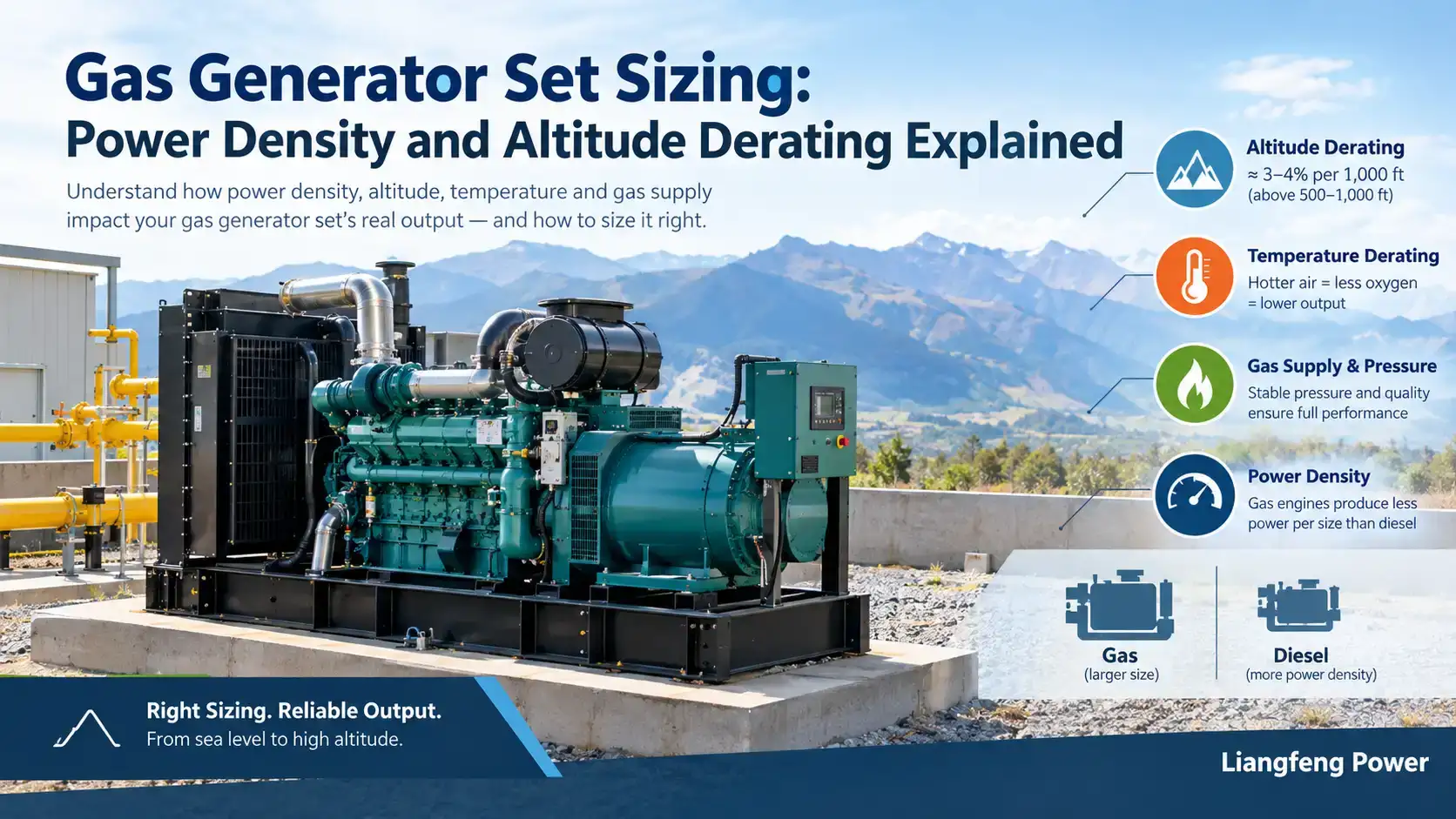
A gas generator set loses roughly 3 to 4 percent of its rated electrical output for every 1,000 feet of elevation above sea level, and that number climbs further once ambient temperature and gas supply pressure enter the picture. For buyers comparing gas generator set solutions against diesel alternatives, this derating behavior, combined with the fact that gas engines already produce less power per unit of physical size than diesel engines, changes the sizing math in ways that a straightforward generator set sizing calculation doesn't fully capture on its own.
Two generator sets with identical kVA nameplates, one gas and one diesel, can perform very differently once they're both installed at a site with meaningful elevation or heat. The gas unit typically needs a larger physical footprint to begin with, and then loses a bigger share of its rated output once environmental derating factors are applied. Skipping this distinction during sizing tends to produce a gas genset that looks adequate on the spec sheet but underdelivers the moment it's running under real site conditions.
This guide breaks down why gas engines have lower power density than diesel engines, how altitude and temperature derating specifically affect gas combustion, and how to combine these factors into a sizing calculation that holds up once the equipment is actually installed.
Why Gas Engines Behave Differently During Sizing
Before getting into the specific derating numbers, it helps to understand the underlying reason gas and diesel generator sets respond so differently to the same site conditions. Diesel engines rely on compression ignition and can tolerate a wider range of air density before combustion quality suffers. Gas engines are spark-ignited and depend on a tightly controlled air-fuel mixture to burn cleanly, which makes them considerably more sensitive to anything that changes the amount of oxygen reaching the combustion chamber, elevation, heat, or humidity included.
Power Density Explained for Gas Engines
Power density refers to how much output an engine produces relative to its physical size and weight. Diesel fuel carries more energy per unit of volume than natural gas, and diesel engines run at higher compression ratios, both of which allow a diesel engine to generate more power from a comparatively smaller block. A gas engine producing the same kW output typically needs to be physically larger, with a bigger displacement, to compensate for this lower energy density.
This has a direct sizing implication for buyers. Comparing a gas generator set and a diesel generator set at the same kVA rating on paper doesn't mean the two units are equivalent in size, weight, or footprint. Facilities with limited installation space sometimes discover this only after the gas unit arrives and needs considerably more room than expected.
Air-Fuel Mixture Precision & Why It Matters for Output
Gas engines run on a stoichiometric or near-stoichiometric air-fuel ratio, meaning the mixture has to stay within a fairly narrow band for combustion to remain efficient and stable. Too much air relative to fuel, or too little, and the engine either loses power or starts to run rough. This precision requirement is managed by the gas mixer and the engine's control system, which continuously adjust the ratio to match operating conditions.
The practical consequence is that anything disrupting this balance, thinner air at altitude, hotter intake air, or inconsistent fuel supply pressure, has an outsized effect on gas engine output compared to a diesel engine facing the same conditions. This sensitivity is exactly why altitude and temperature derating tend to hit gas generator sets harder than their diesel counterparts.
Altitude Derating for Gas Generator Sets
As elevation increases, atmospheric pressure drops and air becomes less dense, meaning each intake stroke delivers less oxygen to the combustion chamber. For gas engines, this reduced oxygen availability forces a corresponding reduction in fuel delivery to maintain the correct air-fuel ratio, which directly lowers the power the engine can produce.
A commonly referenced rule of thumb for naturally aspirated gas engines is a derating of roughly 3 to 4 percent for every 1,000 feet of elevation above a manufacturer-specified threshold, often somewhere between 500 and 1,000 feet depending on the specific engine model. Turbocharged gas engines handle moderate elevation increases better than naturally aspirated units, since the turbocharger compensates for some of the lost air density, but even turbocharged models require derating once altitude climbs high enough to exceed the turbocharger's compensating range. Naturally aspirated gas engines tend to lose output more quickly and more severely than turbocharged units facing the same elevation, which is worth factoring in when comparing engine options for a high-altitude installation.
Temperature Derating for Gas Engines
Heat reduces air density in much the same way altitude does, and the effect compounds when a site experiences both high elevation and high ambient temperature at the same time. Hotter intake air contains less oxygen per unit of volume, which again forces a reduction in fuel delivery to preserve proper combustion, lowering available output.
Beyond the direct combustion impact, elevated ambient temperatures also reduce the effectiveness of the cooling system, since there's less of a temperature differential between the engine and the surrounding air for heat to dissipate into. A gas generator set installed in a facility with poor ventilation or consistently high ambient temperatures may need additional derating on top of the altitude adjustment, even if the site itself isn't at significant elevation.
Fuel Supply Quality & Gas Pressure's Role in Usable Output
Altitude and temperature aren't the only variables that affect how much power a gas generator set can actually deliver on-site. The gas supply itself, specifically its pressure and quality, plays a direct role. If the minimum gas pressure at the engine's inlet connection falls below what the engine requires at full load, the unit can underperform even when every other sizing factor was calculated correctly.
This is a detail that sometimes gets overlooked during the planning stage, since it depends on the site's actual gas infrastructure rather than a published derating chart. Confirming gas type, supply pressure, and consistency at the connection point before finalizing an order helps avoid a situation where the generator set is sized correctly on paper but still falls short in practice due to an unrelated supply-side issue.
Combining Power Density Loss and Derating for Final Site Sizing
Sizing a gas generator set correctly means accounting for these factors together rather than treating any single one in isolation. The process generally starts with the base kVA requirement calculated from the facility's load, as covered in a standard sizing calculation, and then layers on the site-specific adjustments: altitude derating, temperature derating, and confirmation that gas supply conditions can actually support the engine's fuel demand at full load.
A formula commonly used for a rough estimate looks like this: Available Output equals Rated Output multiplied by an Altitude Factor and a Temperature Factor. For example, a 1,000 kW gas generator set with an altitude factor of 0.90 and a temperature factor of 0.95 would deliver an available output closer to 855 kW once both derating factors are applied, a meaningful gap from the nameplate figure that needs to be planned for rather than discovered after installation.
Worked Example: Sizing a Gas Generator Set at Elevation
Consider a facility that calculates a base requirement of 500 kVA for its gas generator set under standard reference conditions, based on running load, motor starting surges, and a standard safety margin. The site itself sits at 4,000 feet elevation with an average ambient temperature of 32°C, both meaningfully above the sea-level, 25°C conditions the base rating assumes.
Applying an altitude derating of roughly 3.5 percent per 1,000 feet above a 1,000-foot threshold works out to about 10.5 percent total altitude derating for this site. Adding a temperature derating of around 2 percent for the elevated ambient conditions brings the combined derating to approximately 12.5 percent. A 500 kVA unit reduced by that margin delivers closer to 437 kVA of usable output at this specific site, meaning the facility would need to size up to a larger standard rating, likely 575 or 600 kVA, to reliably meet its actual 500 kVA requirement once installed.
Conclusion: Sizing for the Site, Not Just the Load
Gas generator sets bring real advantages in terms of emissions and fuel handling, but their lower power density and heightened sensitivity to altitude and temperature mean the sizing process can't stop at a base load calculation. A unit that looks correctly matched to the facility's kVA requirement on paper can come up meaningfully short once elevation, heat, and gas supply conditions are factored in at the actual installation site.
Working through power density considerations, altitude and temperature derating, and gas supply verification before finalizing an order is what separates a gas generator set that performs reliably for years from one that leaves a facility undersized the first time real-world conditions test it. Treating these factors as part of the core sizing process, rather than an afterthought applied once problems show up, is the difference that matters most.
Sourcing the Right Gas Generator Set for Your Site
Not every project needs the same level of scrutiny around altitude and temperature, but for sites with meaningful elevation, heat, or unusual gas supply conditions, getting these calculations right before committing to an order matters. Liangfeng Power works through these site-specific factors directly with buyers rather than leaving derating as something discovered after delivery.
For businesses working on wholesale gas generator set sourcing for a site with unusual environmental conditions, sharing elevation, temperature range, and gas supply details upfront allows our team to confirm a specification that actually holds up once the unit is running.
Featured Articles
A gas generator set loses roughly 3 to 4 percent of its rated electrical output for every 1,000 f
READ FULLA supplier quotes 100 kVA standby and 90 kVA prime on what turns out to be the exact same engine
READ FULLGetting the sizing wrong on a generator set is one
READ FULL