




The Ultimate Technical Spec Guide for Industrial Gas Generator Sets
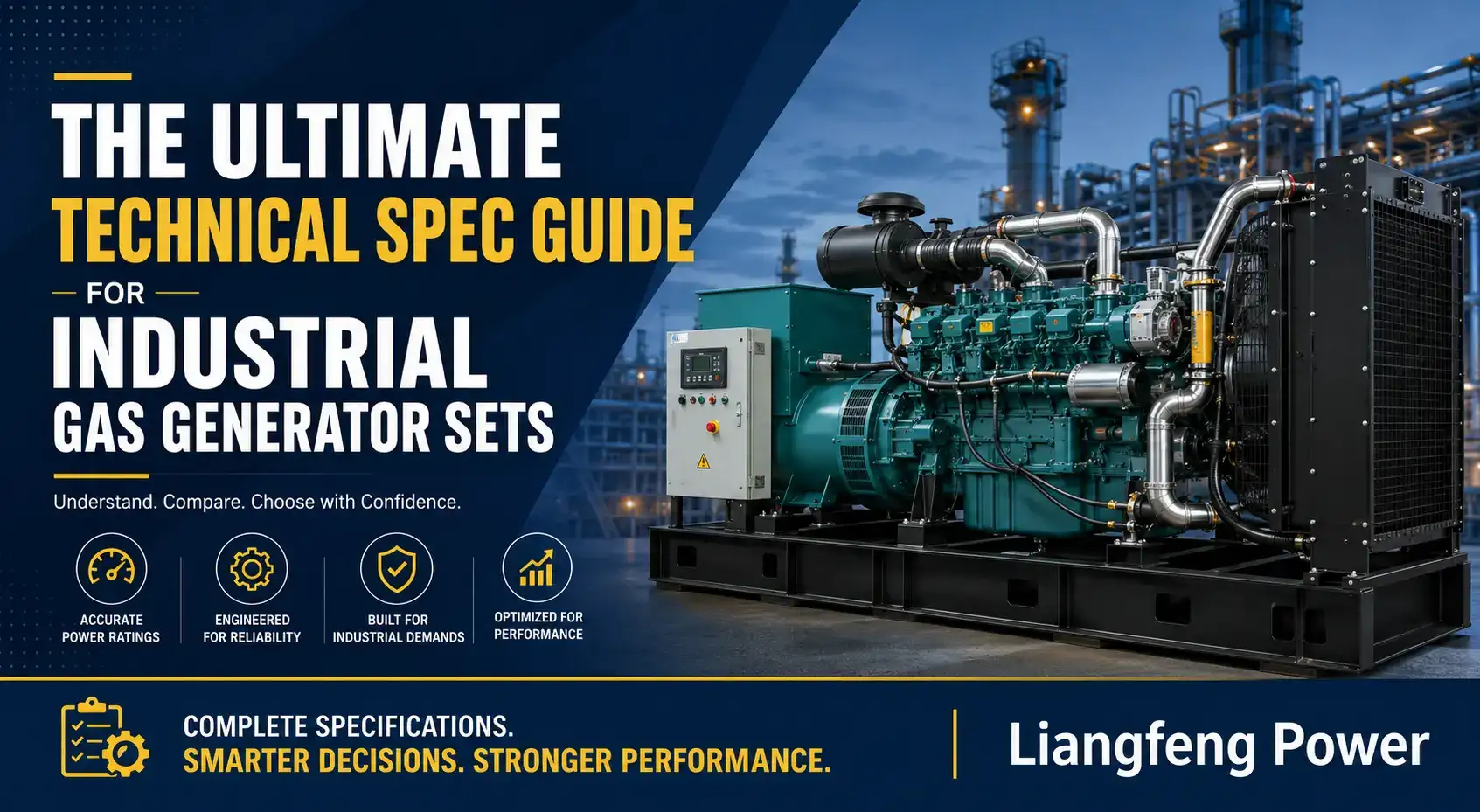
Industrial power systems require more than just a generator that can produce electricity. Factories, manufacturing plants, processing facilities, mining sites, and commercial infrastructure projects need equipment that can deliver stable performance under real operating conditions. When buyers review heavy-duty China gas generator set specifications, they are not simply comparing power ratings. They are evaluating how a complete power generation system will perform under different loads, fuel conditions, environmental factors, and operating schedules. Every technical specification on a generator datasheet provides information that can influence reliability, efficiency, maintenance planning, and long-term operating costs.
An industrial gas generator set combines several major systems into one power solution. The gas engine, alternator, cooling system, control panel, fuel system, and protection devices must work together to produce dependable electrical power. Understanding these specifications helps buyers make informed decisions instead of selecting equipment based only on generator capacity. This guide explains the most important technical specifications found in industrial gas generator sets and shows how each specification affects real industrial applications.
01. Understanding Industrial Gas Generator Set Specifications
Before reviewing individual technical parameters, it is important to understand what generator specifications actually represent. A technical specification sheet is a detailed engineering document that explains the operating capabilities, performance limits, electrical characteristics, fuel requirements, and environmental conditions of an industrial gas generator set.
Many buyers focus only on generator capacity when comparing equipment. That approach can create problems later because two generator sets with the same power rating may perform very differently in actual industrial environments. Engine design, alternator quality, cooling performance, fuel compatibility, and control system functions all contribute to overall generator performance. For this reason, experienced project engineers review the complete specification sheet before making a purchasing decision.
1.1 What Is an Industrial Gas Generator Set?
An industrial gas generator set is a power generation system that converts fuel gas into electrical energy. The system includes a gas engine that produces mechanical power and an alternator that converts that mechanical power into electricity. Supporting systems such as the cooling system, fuel delivery system, control panel, and protection devices help maintain safe and stable operation.
Industrial gas generator sets are commonly used in manufacturing plants, industrial processing facilities, agricultural projects, commercial complexes, utility support stations, and data centers. Depending on the application, these systems may operate as a primary power source, standby power source, or continuous power solution.
1.2 Why Technical Specifications Matter
Technical specifications provide measurable information about generator performance. Instead of relying on marketing descriptions, buyers can use specification data to compare equipment based on engineering facts.
A specification sheet helps answer important questions about generator performance. It explains how much power the equipment can produce, which fuel sources it can use, how it responds to load changes, what environmental conditions it can handle, and how efficiently it operates. These details help project planners select equipment that matches the requirements of a specific industrial application.
02. Generator Power Rating and Output Capacity
Power rating is usually the first specification buyers review. While generator capacity is important, many buyers misunderstand the different rating categories. Understanding these ratings helps prevent oversizing, undersizing, and operational problems after installation.
2.1 Prime Power Rating
Prime power refers to the amount of electrical power an industrial gas generator set can continuously supply while operating under variable load conditions. This rating is commonly used when the generator serves as the main power source for a facility.
Manufacturing plants, mining operations, and remote industrial projects often depend on prime-rated generator sets because utility power may not be available. In these situations, the generator must operate for long periods while maintaining stable voltage and frequency. Prime power ratings help engineers determine whether the generator can support daily operational demands without excessive stress on the engine and alternator.
2.2 Standby Power Rating
Standby power represents the maximum electrical output available during utility power interruptions. This rating is designed for emergency situations rather than continuous operation.
Data centers, hospitals, commercial buildings, and critical infrastructure projects frequently evaluate standby ratings when selecting backup power equipment. Although standby ratings are typically higher than prime ratings, generators should not operate continuously at standby capacity. The rating exists to provide additional support during emergency operating conditions.
2.3 Understanding Power Rating Differences
|
Rating Type |
Main Purpose |
Operating Pattern |
|
Prime Power |
Continuous industrial operation |
Variable load |
|
Standby Power |
Emergency backup operation |
Limited operating hours |
|
Continuous Power |
Constant load applications |
Fixed load operation |
This distinction becomes important when calculating load demand. Selecting equipment based on the wrong rating can affect generator life, fuel consumption, and overall system reliability.
03. Gas Engine Technical Specifications
The gas engine is the heart of an industrial gas generator set. Engine specifications influence power output, fuel consumption, operating stability, maintenance requirements, and load response. Because the engine produces the mechanical energy that drives the alternator, engine performance directly affects the quality of generated electricity.
3.1 Engine Displacement
Engine displacement refers to the total volume inside all cylinders. Manufacturers usually express displacement in liters. Larger displacement engines generally support higher power outputs because they can process greater volumes of air and fuel during combustion.
Displacement alone does not determine generator performance, but it provides useful information about engine design. In industrial applications, larger displacement engines often deliver stronger torque characteristics and improved load acceptance. This becomes particularly important when generators power equipment with sudden load changes, such as compressors, pumps, and industrial motors.
3.2 Cylinder Configuration
The arrangement and number of cylinders influence engine balance, vibration levels, and power delivery characteristics. Industrial gas engines commonly use inline and V-type configurations.
|
Configuration |
Typical Application |
|
Inline Engine |
Small and medium power ranges |
|
V-Type Engine |
Medium and large power ranges |
V-type engines are frequently used in higher-capacity industrial generator sets because they can deliver greater power within a compact engine structure. Their design also supports smoother operation in demanding industrial environments.
3.3 Engine Speed
Generator engine speed directly affects electrical frequency. In regions using 50 Hz electrical systems, industrial gas generators commonly operate at 1500 RPM. In regions using 60 Hz systems, generators often operate at 1800 RPM.
Stable engine speed helps maintain stable frequency output. When frequency fluctuates, connected industrial equipment may experience performance issues. For this reason, governor systems continuously regulate engine speed during operation.
04. Fuel System and Gas Compatibility
Fuel specifications play a major role in generator selection because fuel quality directly affects combustion performance, engine life, and operating costs. Industrial gas generator sets can support different fuel sources, but each generator has specific fuel requirements that must be followed.
4.1 Natural Gas Specifications
Natural gas remains one of the most common fuels used in industrial gas generator sets. Generator manufacturers typically specify acceptable methane concentration levels, gas pressure requirements, and fuel quality standards.
Fuel pressure is particularly important because insufficient pressure can affect engine performance and power output. Excessive pressure may also create operational issues. As a result, fuel supply systems must match the generator manufacturer's specified operating range.
4.2 Biogas and Alternative Gas Sources
Many industrial projects use biogas generated from agricultural waste, wastewater treatment plants, food processing facilities, and landfill operations. These applications help convert waste materials into useful energy while reducing dependence on traditional fuel sources.
Biogas often contains varying methane concentrations along with contaminants such as moisture and hydrogen sulfide. Because of these conditions, industrial gas generator sets designed for biogas applications often include specialized fuel handling and filtration systems.
4.3 Fuel Consumption and Fuel Quality
Fuel consumption figures help buyers estimate operating costs over the life of the generator. These values are normally measured at different load levels because fuel usage changes as electrical demand increases.
When evaluating fuel system specifications, project engineers frequently compare generator performance data with broader gas genset wholesale requirements to verify compatibility with local gas infrastructure, fuel quality standards, and expected operating conditions. This approach helps reduce installation challenges and improves long-term operational stability.
05. Alternator Technical Specifications
While the engine produces mechanical energy, the alternator converts that energy into usable electricity. Alternator specifications influence voltage quality, electrical stability, efficiency, and equipment protection.
5.1 Voltage Rating
Voltage ratings determine how generated electricity integrates with the site's electrical distribution system. Industrial facilities use different voltage requirements depending on the equipment installed at the location.
|
Voltage Level |
Typical Application |
|
400V |
Industrial facilities |
|
415V |
Manufacturing plants |
|
480V |
Heavy industrial systems |
|
Medium Voltage |
Large-scale infrastructure projects |
Selecting the correct voltage rating helps simplify installation and reduces the need for additional electrical conversion equipment.
5.2 Frequency Characteristics
Frequency determines compatibility with industrial equipment, control systems, electric motors, and automation systems. Most industrial gas generator sets operate at either 50 Hz or 60 Hz depending on regional electrical standards.
A stable frequency output protects connected equipment and supports efficient operation. Industrial facilities that rely on automated production systems often pay close attention to frequency stability specifications when evaluating generator options.
5.3 Power Factor
Power factor represents the relationship between actual power and apparent power within an electrical system. Most industrial generators use a standard power factor rating of 0.8.
Power factor influences generator sizing calculations and affects how efficiently electrical energy is delivered to connected equipment. Understanding power factor specifications helps engineers calculate true electrical demand more accurately.
5.4 Insulation and Protection Ratings
Industrial environments often expose electrical equipment to heat, dust, humidity, and vibration. Alternator insulation and protection ratings help buyers understand how well the equipment can handle these conditions.
Class H insulation systems support higher operating temperatures, while protection ratings such as IP23 and IP44 indicate resistance to environmental exposure. These specifications contribute to alternator durability and operational reliability.
06. Control System and Monitoring Functions
Modern industrial gas generator sets rely heavily on control systems. The controller acts as the central management unit, continuously monitoring generator operation and responding to changing conditions.
A sophisticated controller not only displays operating information but also helps protect valuable equipment from damage. This capability becomes especially important in industrial environments where generator failure can interrupt production and create significant operational costs.
6.1 Generator Controller Functions
Industrial controllers monitor a wide range of operating parameters. These include voltage output, electrical current, engine temperature, oil pressure, frequency stability, and operating hours.
Operators use this information to evaluate generator performance and identify developing issues before they become serious problems. Continuous monitoring also supports preventive maintenance programs and improves equipment availability.
6.2 Protection Features
Protection systems help prevent damage to critical generator components. Industrial gas generator sets typically include safeguards against overload conditions, low oil pressure, excessive temperature, abnormal frequency conditions, and over-speed situations.
These protective functions allow the generator to shut down or trigger alarms when operating conditions move beyond safe limits. Such protection helps reduce the risk of expensive repairs and unexpected downtime.
6.3 Remote Monitoring Systems
Remote monitoring technology allows operators to access generator information from centralized control rooms or remote locations. Industrial organizations with multiple facilities often use remote monitoring systems to manage equipment across different sites.
Remote monitoring supports maintenance planning, alarm management, performance analysis, and operational reporting. This capability improves visibility into generator operation without requiring constant on-site supervision.
07. Cooling System Specifications
Every industrial gas engine generates substantial heat during operation. The cooling system removes this heat and helps maintain stable operating temperatures. Without effective cooling, engine performance, fuel efficiency, and component life can decline significantly.
Because industrial generators frequently operate for extended periods, cooling system specifications deserve careful attention during the equipment evaluation process.
7.1 Cooling System Design
Most industrial gas generator sets use radiator-based cooling systems. These systems circulate coolant through the engine and transfer heat through a radiator assembly.
Cooling system specifications often include coolant capacity, radiator dimensions, airflow requirements, and heat rejection values. These figures help engineers determine whether the cooling system can support expected operating conditions.
7.2 Ambient Temperature Capability
Industrial facilities operate in a wide range of climates. Some installations experience extremely high ambient temperatures, while others operate in cold environments.
Generator manufacturers specify the temperature range within which the equipment can operate effectively. Understanding these limits helps project planners select suitable equipment for the installation location.
7.3 Altitude Performance
Altitude affects engine performance because air density decreases as elevation increases. Reduced air density influences combustion efficiency and may lower available power output.
Most generator manufacturers provide derating information that explains how power output changes at higher elevations. Engineers use this information when designing projects located in mountainous regions or elevated industrial sites.
08. Noise, Emissions, and Environmental Performance
Environmental performance has become an important consideration in many industrial projects. Noise levels, emission characteristics, and environmental operating conditions can influence both equipment selection and installation planning.
8.1 Sound Level Specifications
Noise levels are usually measured in decibels at a specified distance from the generator. Sound specifications help determine whether additional noise reduction measures may be required.
Industrial sites located near commercial zones, residential developments, or office facilities often place greater emphasis on sound level performance. In these situations, sound-attenuated generator enclosures may help reduce environmental impact.
8.2 Emission Characteristics
Gas generator technology is often selected because of its favorable emission profile compared with some traditional fuel systems. Generator specifications may include data related to nitrogen oxides, carbon monoxide, and hydrocarbon emissions.
Environmental regulations vary between regions, so project planners often compare emission specifications with local compliance requirements before selecting equipment.
8.3 Operating Environment Requirements
Environmental specifications define acceptable temperature ranges, humidity limits, ventilation requirements, and dust exposure conditions. These values help determine whether additional protective measures may be necessary at the installation site.
Understanding environmental limits before installation can help improve reliability and reduce future maintenance concerns.
09. Installation and Site Requirements
Even the most advanced industrial gas generator set may not perform properly if installation requirements are ignored. Site conditions, foundation design, ventilation planning, and electrical integration all influence generator performance.
For this reason, installation-related specifications deserve the same attention as engine and alternator specifications.
9.1 Foundation Design
Generator weight, vibration characteristics, and structural dimensions influence foundation requirements. A properly designed foundation supports stable operation and helps reduce vibration transfer to surrounding structures.
Manufacturers typically provide detailed information regarding equipment dimensions, mounting arrangements, and weight distribution. These details help engineers prepare suitable installation plans.
9.2 Ventilation Requirements
Industrial gas generator sets require sufficient airflow for both combustion and cooling. Poor ventilation can increase operating temperatures and affect generator efficiency.
Ventilation planning normally considers air intake pathways, air discharge routes, radiator airflow requirements, and equipment room dimensions. Proper airflow management supports reliable long-term operation.
9.3 Electrical Integration
Generator systems must connect safely with switchgear, transformers, distribution panels, and facility electrical networks. Electrical specifications provide guidance regarding connection requirements, protection coordination, and system compatibility.
Careful review of these specifications helps reduce installation complexity and supports safe operation after commissioning.
10. How to Evaluate Generator Specifications Before Purchase
Technical specifications provide valuable information, but buyers must know how to interpret that information correctly. A specification sheet should be viewed as a complete engineering package rather than a collection of separate numbers.
Successful generator selection depends on understanding how individual specifications interact within the overall power generation system.
10.1 Review the Complete Datasheet
Many buyers focus immediately on generator capacity and overlook other critical specifications. A complete review should include engine characteristics, fuel requirements, alternator performance, control functions, cooling capability, environmental limits, and installation requirements.
This broader approach provides a more accurate understanding of generator suitability for a specific application.
10.2 Match Specifications to Real Operating Conditions
A generator that performs well in one application may not be the best choice for another. Manufacturing plants, biogas facilities, utility support stations, commercial buildings, and industrial processing operations each place different demands on a power generation system.
Evaluating specifications within the context of actual operating conditions helps buyers select equipment that delivers reliable performance throughout its service life.
Conclusion: Understanding Technical Specifications Improves Generator Selection
Industrial gas generator sets consist of multiple interconnected systems that must operate together to produce dependable electrical power. Engine specifications influence combustion and power production. Alternator specifications determine electrical output quality. Fuel system requirements affect efficiency and operating costs. Cooling systems support temperature control, while control panels manage monitoring and protection functions.
A detailed review of technical specifications helps buyers understand how a generator will perform under real industrial conditions. Rather than focusing on generator capacity alone, decision-makers should evaluate power ratings, engine characteristics, fuel compatibility, electrical performance, environmental limits, and installation requirements as part of a complete assessment process. This approach supports better equipment selection, improved operational reliability, and stronger long-term value.
Select an Industrial Gas Generator Set with Confidence
Choosing an industrial gas generator set becomes much easier when every specification is understood within the context of the intended application. A thorough review of engine data, alternator performance, fuel requirements, cooling capacity, control functions, and environmental ratings can help identify equipment that aligns with operational goals and site conditions. Careful specification analysis often leads to better reliability, more predictable operating costs, and improved project outcomes.
As a trusted power generator exporter, Liangfeng Power provides industrial gas generator solutions designed to meet the demands of manufacturing facilities, infrastructure projects, commercial operations, and energy applications. Understanding technical specifications before purchasing allows buyers to select equipment that supports stable power generation and long-term operational performance.
Featured Articles
Industrial power systems require more than just a generator that can produce el
READ FULLIndustrial operations need deep planning when they grow. Big factories, process
READ FULLSelecting a reliable China Generator Set Supplier r
READ FULL