



5 Critical Factors for Evaluating Industrial Power Equipment Manufacturers
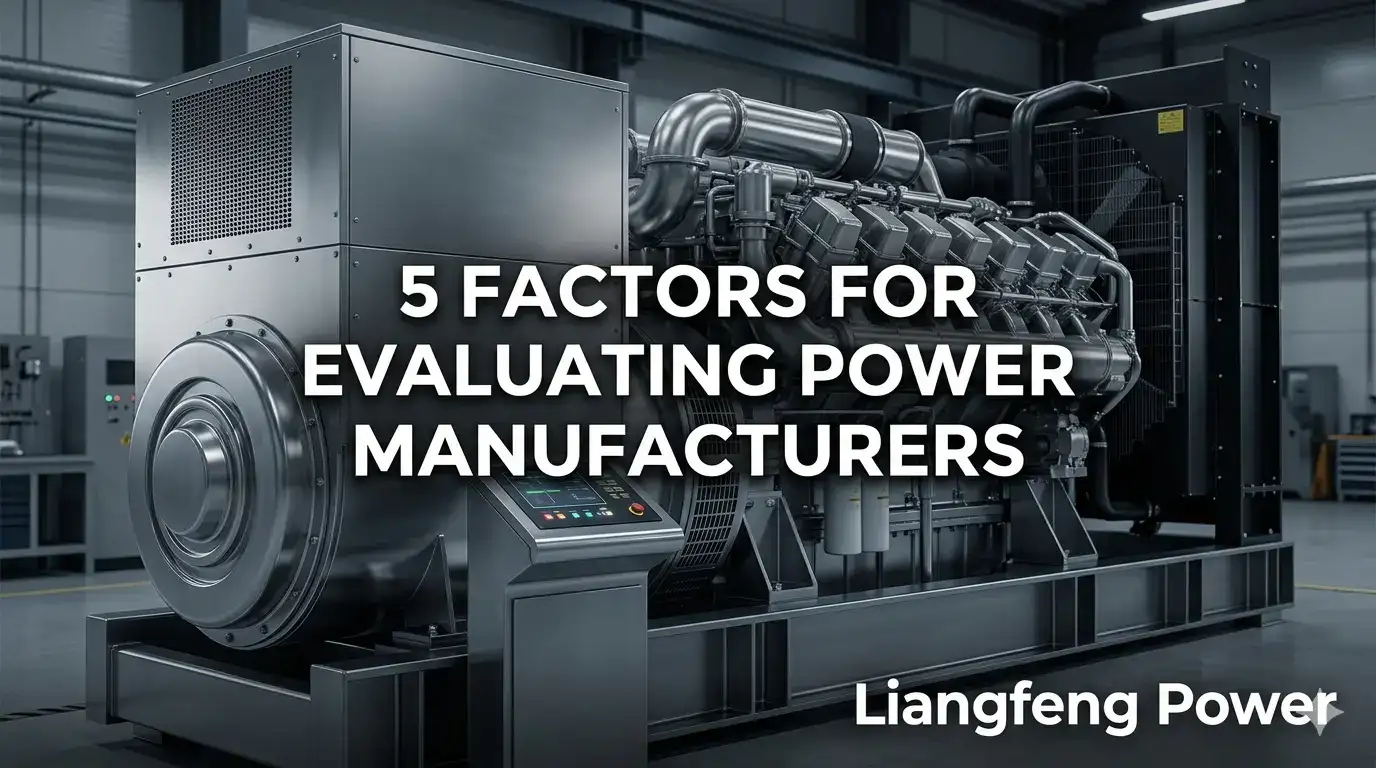
Selecting a reliable China Generator Set Supplier remains the most important step for any large-scale infrastructure project. Industrial power equipment requires high precision and durable engineering to perform consistently under heavy loads. Business owners must look beyond the price tag when they evaluate a manufacturing partner in the international market. A professional manufacturer ensures that every unit meets global emission and safety standards. This initial decision affects the long-term success of your operations and the safety of your facility.
High-performance solutions involve complex technical specifications that demand expert oversight. You must identify a partner who understands the unique requirements of the industrial, commercial, and mining sectors. A trustworthy factory provides transparent documentation and technical data for every engine and alternator assembly. When you choose a certified production facility, you reduce the risk of mechanical failure and electrical instability. This guide explains the essential factors that help you identify a powerhouse for your energy needs.
Understanding these critical points will help you secure your investment and ensure a stable energy supply for your global projects. Evaluating the right partner involves checking production capacity, logistics expertise, and after-sales support systems. Many procurement officers prioritize factory-direct sourcing to maintain high standards of quality control and cost-efficiency. By following this comprehensive evaluation framework, you can build a sustainable supply chain for your distribution business.
1. Verifying Factory Certifications and Engineering Standards
The quality of industrial machinery starts with formal certifications. A reputable manufacturer always maintains updated ISO and CE certifications for their production lines. These documents prove that the factory follows international safety protocols during the assembly process. You should verify the authenticity of these certificates before placing a bulk order.
High-quality engineering involves the integration of premium engines and alternators. Professional factories utilize advanced CNC machinery to create precise components for every unit. When a manufacturer invests in modern technology, they reduce the risk of mechanical failure. Buyers must ask for technical data sheets that show the exact specifications of the internal parts. Engineering standards also include noise control and vibration management features. A well-built unit operates smoothly without causing excessive environmental disturbance. You should prioritize partners who demonstrate a commitment to continuous research and development. This ensures that you receive the latest power generation technology available in the market.
If your project requires eco-friendly and cost-effective energy solutions, you should consider investing in a wholesale gas generator set directly from a certified production facility. These units offer lower emissions and reduced operational costs for long-term industrial applications.
2. Analyzing Load Testing and Performance Quality Control
Performance testing is a non-negotiable part of the manufacturing lifecycle. A professional production facility conducts a rigorous 4-hour performance test for every single unit before dispatch. This test checks the stability of the voltage and the efficiency of the fuel consumption. You should request the documented test reports to confirm the operational capacity of the equipment.
Quality control experts monitor the temperature and pressure levels during these trial runs. This process identifies any potential leaks or electrical issues before the machine leaves the factory floor. Reliable manufacturers use automated testing lines to ensure human error does not affect the final results. You must evaluate the transparency of the quality control department of your potential partner. If a factory refuses to share testing videos or reports, you should consider other options. Stable power output is vital for hospitals, data centers, and industrial plants. Any fluctuation in power can lead to expensive damage to sensitive machinery. Therefore, choosing a factory with strict testing protocols protects your business from unexpected downtime.
3. Assessing Production Capacity for Bulk Procurement
B2B buyers often manage large-scale projects that require multiple units at once. You must analyze the total production capacity of the manufacturer to avoid project delays. A large factory can manage dozens of high-capacity orders simultaneously without compromising on quality. You should ask about the current inventory levels of both diesel and gas engine models.
Lead times play a vital role in the success of a construction or mining project. If a manufacturer takes too long to assemble the units, your entire timeline might suffer. You should also check if the factory can handle customized fuel configurations for specific regional needs. Some projects require specialized cooling systems or weather-proof enclosures for extreme environments. A versatile manufacturer adapts their production line to meet these unique technical requirements. Direct communication with the production manager helps you understand the realistic delivery dates for your bulk shipment. You should look for a partner who offers a balance between speed and precision during the assembly phase.
4. Evaluating Logistics Expertise and Export Compliance
International trade depends heavily on efficient logistics and proper documentation. An experienced exporter understands the complexity of global shipping and customs regulations. The proximity of the manufacturing facility to major Chinese ports is a significant advantage. This allows for faster transit times and lower domestic transportation costs for every shipment.
Export-ready documentation includes certificates of origin, packing lists, and commercial invoices. Errors in these documents can cause expensive delays at the international borders. You must ensure that your partner handles all customs compliance tasks professionally. They should also provide expert guidance on global emission standards for different regions. Importing heavy machinery requires specific permits depending on the country of destination. A knowledgeable logistics team simplifies this process for the buyer. You should also evaluate the packaging methods used for international transit. Heavy-duty equipment needs secure crating to prevent damage during sea or air transport. Reliable logistics support ensures that your equipment arrives in perfect condition and ready for immediate installation.
5. Reviewing Technical Support and After-Sales Reliability
The relationship between a buyer and a manufacturer does not end after the delivery. Industrial equipment requires regular maintenance and genuine spare parts for long-term reliability. You must review the availability of technical support provided by the factory. A professional partner offers 24/7 technical consultation for troubleshooting and repairs.
After-sales support also includes the provision of detailed maintenance manuals and wiring diagrams. If a machine breaks down, you need immediate access to high-quality spare parts. You should check if the manufacturer maintains a large stock of filters, gaskets, and electrical components. Regional distributors often receive priority access to these parts to support their local clients. You should also evaluate the training opportunities offered by the manufacturer. Some factories provide technical training for your local engineers to ensure proper handling of the machinery. Strong after-sales reliability builds trust and ensures that your power systems operate efficiently for many years. Choosing a partner who values long-term support is the best strategy for sustainable business growth.
Summary of Evaluation Factors
Finding the right manufacturing partner requires a careful analysis of technical and logistical capabilities. You must verify certifications, performance tests, and production capacity before making a final decision. Efficient logistics and strong after-sales support are equally important for international buyers. These five factors provide a comprehensive framework for evaluating industrial power equipment providers. By following these guidelines, you can minimize risks and maximize the return on your investment. A stable and high-performance power system is the backbone of any modern industrial operation.
Secure Your Global Energy Supply
A stable power infrastructure acts as the foundation for every successful industrial operation. If you are looking for a reliable partner, Liangfeng Power stands out as an experienced power generator exporter for global industrial needs and infrastructure projects. We invite you to connect with our technical sales team to receive a custom quote for your specific energy requirements.
Our manufacturing process ensures that every machine delivers maximum power with minimum fuel consumption. We provide high-performance diesel and gas units that meet the most demanding international standards. Partnering with a professional team allows you to manage your projects with confidence and technical security.
Featured Articles
A gas generator set loses roughly 3 to 4 percent of its rated electrical output for every 1,000 f
READ FULLA supplier quotes 100 kVA standby and 90 kVA prime on what turns out to be the exact same engine
READ FULLGetting the sizing wrong on a generator set is one
READ FULL