



Navigating International Trade with Certified China Generator Exporters
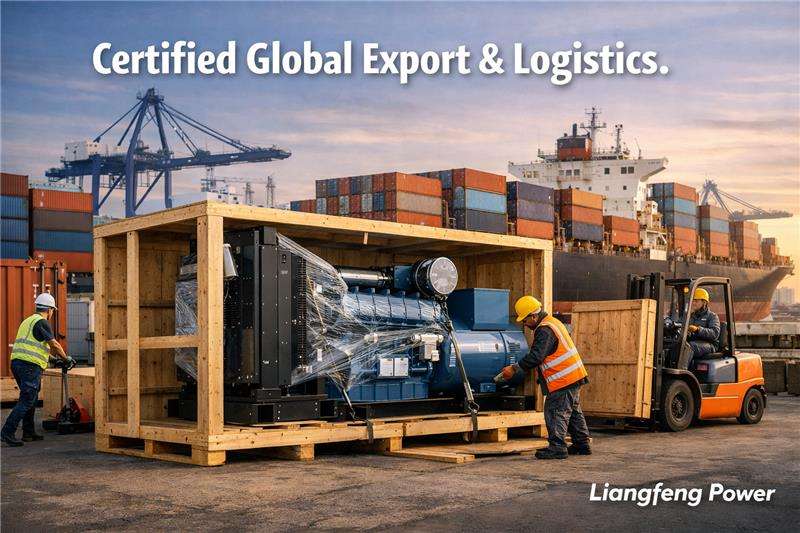
In the global industrial landscape, the procurement of heavy-duty power equipment is not merely a purchase, it is a complex international transaction that requires precision, legal compliance, and logistical expertise. Choosing a licensed and experienced exporter for China generator sets is the most critical decision a B2B buyer can make. Whether you are sourcing high-capacity diesel units for construction or specialized gas-powered systems for continuous energy, the exporter acts as the bridge between the factory floor and your project site. Without a certified partner, businesses often face debilitating customs delays, unforeseen taxes, or even the seizure of equipment due to non-compliance with regional emission laws. A professional exporter ensures that every power generation unit crosses borders legally, safely, and cost-effectively.
The Role of an Experienced Generator Exporter in Global Logistics
A seasoned exporter of industrial power systems does much more than just book a shipping container. They serve as the legal "Exporter of Record," taking responsibility for the accuracy of the cargo's declaration and its adherence to both the shipping and receiving countries' laws. In the world of wholesale power equipment, the logistical chain is fraught with variables. An experienced partner anticipates these challenges, ensuring that the mechanical assembly of the unit is matched with the correct harmonized system (HS) codes, which directly impacts the duty rates and taxes the buyer will eventually pay.
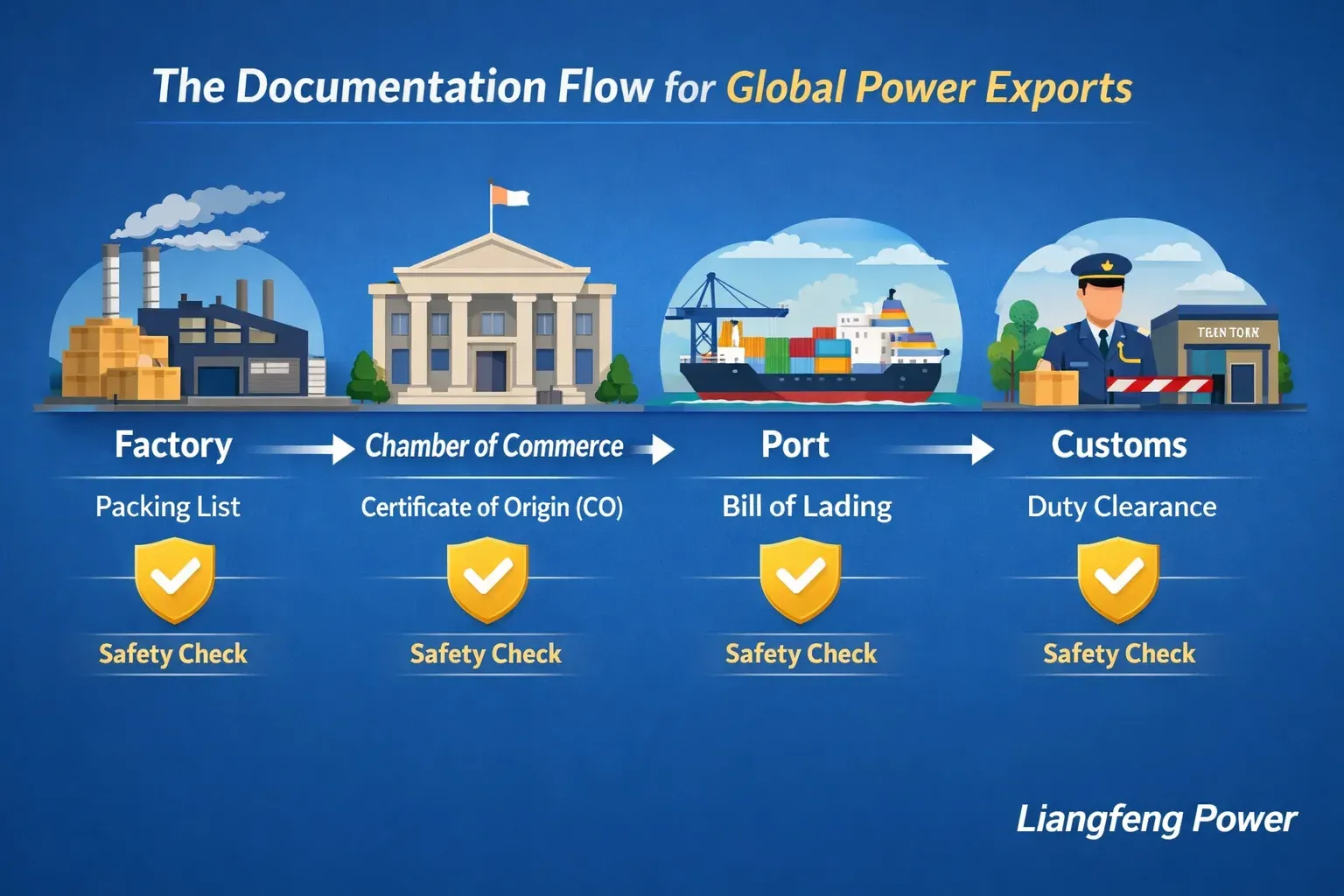
Mastering Export Documentation: Bill of Lading and Certificates of Origin
The paperwork required for exporting combustion-based power sets is extensive and varies significantly depending on the technical nature of the machine. For instance, a diesel-powered unit might require specific hazardous material declarations if it contains residual testing fuel, whereas a gas-fueled system may require pressure vessel certifications for its intake manifolds.
Key documents that a professional exporter manages include:
- Bill of Lading (B/L): The definitive contract between the owner of the goods and the carrier.
- Certificate of Origin (CO): Vital for claiming preferential tariffs under Free Trade Agreements (FTAs).
- Commercial Invoice & Packing List: Detailed breakdowns of every component, from the alternator to the control panel.
- Technical Data Sheets: Required by customs to verify the engine's displacement and power rating.
Accurate documentation ensures that when your power generation shipment reaches a foreign port, the customs officers can quickly verify the contents and release the cargo without expensive storage (demurrage) fees.
Compliance with International Emission and Safety Standards
One of the biggest hurdles in the global genset trade is the divergence of environmental laws. An exporter must be an expert in these differences to prevent a buyer from importing a machine that cannot legally be operated in their region.
|
Standard Category |
Diesel Unit Requirements |
Gas Unit Requirements |
|
Emissions |
Must meet EPA Tier 4 (USA) or Euro Stage V (EU) to minimize particulate matter. |
Focus on Low NOx (Nitrogen Oxide) emissions and CO2 compliance. |
|
Safety Specs |
Focus on fuel tank integrity and vibration dampening. |
Specialized safety valves and leak-detection sensors for gas lines. |
|
Electrical |
Standardized 50Hz/60Hz frequency configurations. |
Advanced electronic mixing and governing systems for fuel stability. |
Certified China generator exporters maintain a database of these regional requirements, ensuring that the engine's exhaust system and fuel delivery components are manufactured to meet the specific "Stage" or "Tier" required by the destination country's environmental protection agency.
Tailoring Export Logistics for Different Fuel Systems
Shipping a power generation set is not a "one size fits all" process. The physical and chemical properties of the fuel system dictate how the unit must be handled during its journey across the ocean.
Shipping Requirements for Diesel Generator Sets
When acting as a China Diesel Generator Exporter, the primary logistical challenges are weight and fluid safety. These machines are characterized by their massive iron-cast engines and heavy steel base frames.
- High-Tonnage Handling: These heavy-duty units require specialized cranes and reinforced containers to prevent structural damage during loading.
- Fuel Tank Safety: While most units are shipped "dry" (without fuel), the internal fuel tanks must be vented and sealed to prevent the buildup of fumes during the high-temperature environment of a cargo ship's hold.
- Corrosion Protection: Because diesel power systems often stay at sea for 30–45 days, exporters must apply anti-corrosive coatings to the exposed metal parts of the alternator and engine block to shield them from the salty, humid sea air.
Handling Global Delivery for Gas Power Solutions
For a China Gas Generator Exporter, the focus shifts from raw weight to technical sensitivity. These gas-fueled energy sets are more complex due to the presence of gas manifolds, mixers, and sensitive electronic fuel-ratio controllers.
- Vibration Mitigation: The electronic governors and gas-air mixers are precision instruments. Exporters use specialized "shock-absorbent" mounting during transit to ensure these components aren't shaken out of calibration by the ship's engines.
- Sealing Integrity: Every connection in the gas intake system must be protected. Exporters often use nitrogen-purging or vacuum-sealing for high-end gas units to ensure no moisture enters the sensitive fuel delivery path during the voyage.
How Global Exporters Manage Cross-Border Heavy Machinery Shipping
The movement of industrial mechanical sets across oceans requires a deep understanding of international commerce laws, specifically Incoterms. These terms define exactly where the exporter's responsibility ends and the buyer's responsibility begins.
Selecting the Right Incoterms (FOB vs. CIF) for Exporting
Choosing the right Incoterm is a strategic financial decision. For most B2B buyers of power generation equipment, the choice usually falls between FOB and CIF:
- FOB (Free On Board): The exporter is responsible for the power unit until it is loaded onto the ship at the Chinese port. This gives the buyer more control over the shipping costs and the choice of the sea carrier.
- CIF (Cost, Insurance, and Freight): The exporter handles everything, including the sea freight and marine insurance, until the cargo reaches the buyer's destination port. This is often preferred by newer importers because it simplifies the process, though it may be slightly more expensive.
An expert exporter will provide a cost-benefit analysis for both, helping you determine which method offers the best risk management for your specific wholesale generator order.
Packaging Standards for Long-Distance Ocean Freight
Standard wooden crates are rarely enough for a 100kVA+ power system. Sea-worthy packaging is a technical requirement that prevents the loss of an expensive asset.
- Vapor Barrier Lining: The interior of the crate is often lined with a vacuum-sealed foil that prevents moisture from reaching the electrical windings of the unit.
- Heavy-Duty Skidding: The base of the package is a reinforced steel or hardwood pallet that allows for four-way forklift access, ensuring the heavy machinery can be moved safely at various transit hubs.
- Desiccant Usage: Industrial-grade silica gel packs are placed inside the generator canopy to absorb any residual humidity that manages to penetrate the outer layers.
Identifying Top Export Hubs for Power Equipment
The location of the generator manufacturer relative to China’s major ports plays a significant role in the total landed cost of the equipment. Sourcing from regions with established industrial clusters provides a logistical "fast track" for power equipment exports.
Major Chinese Export Ports for Heavy Machinery
- Shanghai Port: The world's busiest container port, offering the most frequent "vessel calls" to Europe and North America. Ideal for urgent power generation projects.
- Ningbo-Zhoushan: Known for its heavy-lift capabilities, making it the preferred hub for high-megawatt diesel units that require specialized cranes.
- Guangzhou/Shenzhen: The primary gateway for power systems heading to Southeast Asia and Africa, offering highly competitive freight rates for these routes.
By selecting an exporter located near these hubs, B2B buyers can save significantly on "Inland Trucking" costs. This efficiency also reduces the time the energy equipment spends in transit between the factory and the ship, further minimizing the risk of accidental damage.
Strategic Advantages of Sourcing via Licensed Exporters
Beyond the technicalities of shipping, a licensed exporter provides a layer of "Financial Security." They are often vetted by government trade bureaus, which means their business practices, from the way they handle telegraphic transfers (TT) to how they manage quality claims—are monitored. For a buyer, this reduces the risk of fraud and ensures that if a power unit arrives with transit damage, there is a clear, legal framework for filing insurance claims and obtaining replacement parts.
Furthermore, these export specialists often have "Long-Term Freight Contracts" with major shipping lines like Maersk or COSCO. These contracts allow them to offer "Priority Loading" for your wholesale generator sets, ensuring your cargo doesn't get "rolled" (left behind) during peak shipping seasons like the weeks leading up to the Lunar New Year.
🌍 Looking for Reliable Global Power Export Solutions?
Navigating the complexities of international trade requires a partner you can trust. Liangfeng Power offers a wide range of certified power equipment designed to meet international standards. Connect with our export experts today to experience hassle-free global logistics.
Conclusion: Securing Your Global Power Supply Chain
The journey of a China generator set from the assembly line to your industrial site is a marathon of technical and legal hurdles. Navigating this journey successfully requires more than just a good product; it requires a partner who understands the nuances of international trade law, emission compliance, and ocean logistics. By prioritizing certified exporters who specialize in both diesel and gas power solutions, you protect your investment from the risks of the global supply chain.
Strategic procurement is about foresight. When you work with an exporter who masters documentation, selects the correct Incoterms, and utilizes sea-worthy packaging, you aren't just buying a machine—you are buying peace of mind. As the global demand for reliable energy continues to rise, the ability to move power generation equipment seamlessly across borders will remain the ultimate competitive advantage for B2B enterprises worldwide.
Featured Articles
A gas generator set loses roughly 3 to 4 percent of its rated electrical output for every 1,000 f
READ FULLA supplier quotes 100 kVA standby and 90 kVA prime on what turns out to be the exact same engine
READ FULLGetting the sizing wrong on a generator set is one
READ FULL