




Diesel Generator Set vs Gas Generator: Which Delivers Better Long-Term Value?
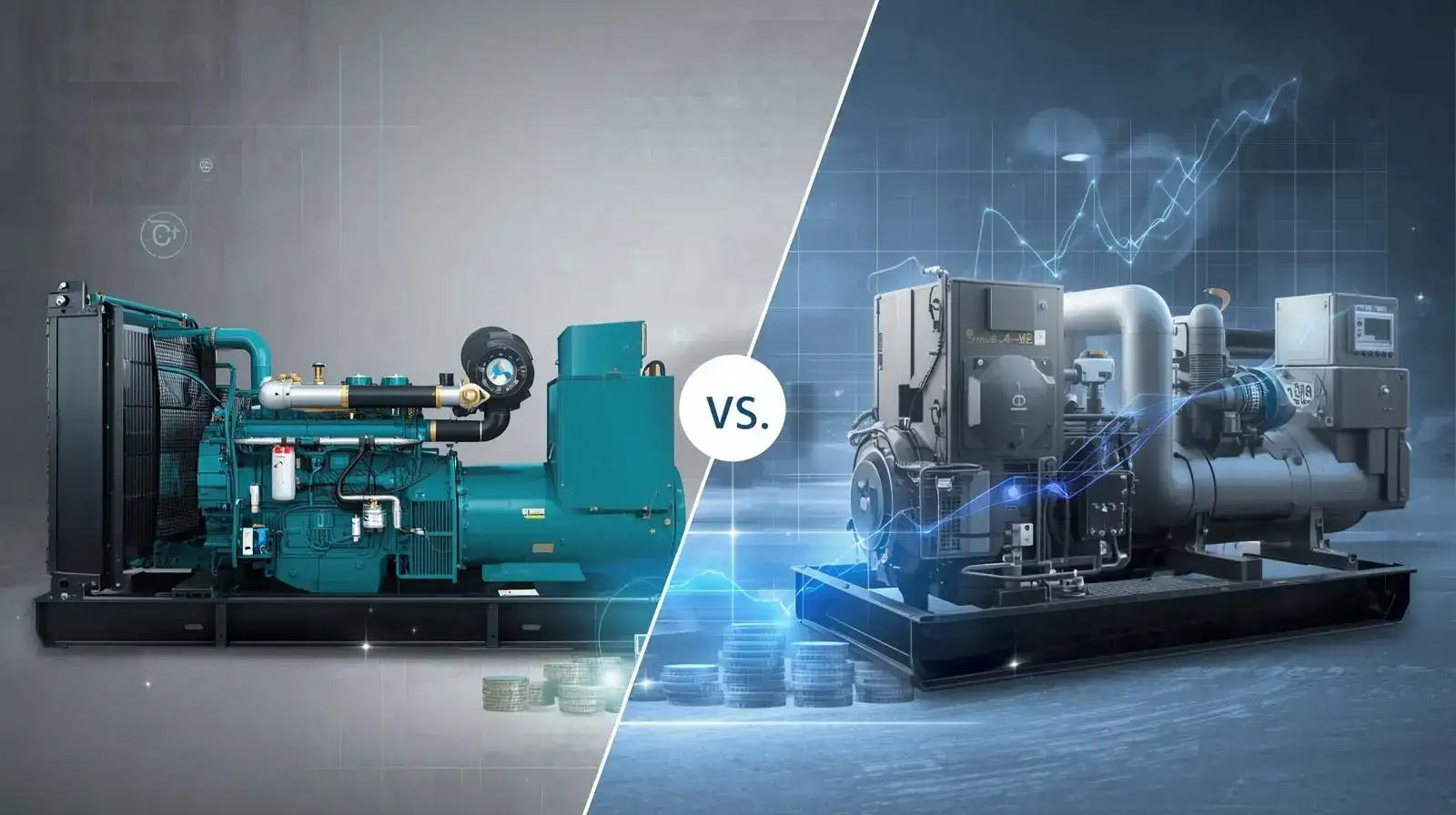
The decision to purchase a diesel generator set or a gas generator is a big investment decision. Both categories offer backup and primary power, yet costs, performance, and maintenance differ significantly.
These differences help businesses and homeowners choose the option that offers the best value for their usage. This is a comparison of key aspects that influence long-term ownership cost and operational advantages.
Original Rapid Price Differences.
Diesel Generator Costs
Most diesel generator units are more expensive to purchase than their gas counterparts. The diesel type of engine is more difficult to build, and its components are heavier and tougher. A 20-kilowatt diesel generator could be 30 to 50 percent higher than a 20-kilowatt gas generator.
Such an increase in rating will lead most buyers to choose gas generators, even if they do not consider the total cost of ownership. Nevertheless, the cost of making a purchase is just the initial part of the costs over a generator's lifetime.
Gas Generator Pricing
Gas generators are affordable, with low entry barriers, and suitable for customers with limited budgets. The less complex design of the engine and the lightweight construction decrease the costs of manufacturing. The lower price will lead to instant savings, as the emergency backup will be used infrequently.
A few hundred dollars is the starting cost of small residential gas generators. Prices of any commercial unit to use in business are moderate to substantial, depending on the capacity and features.
Comparison of Fuel Efficiency
Diesel Fuel Efficiency
Diesel engines use fuel more effectively than gas engines. A diesel generator consumes between 30 and 40 percent more fuel than a gas generator producing the same power output. This efficiency benefit increases over time.
When dealing with applications that require long-term operation or frequent use, the savings from diesel gas will offset the higher purchase cost comparatively soon. The diesel units are meaningful when the businesses use generator sets for a few hours each day and realize significant savings in fuel costs.
Gas Generator Consumption
The gas generators use more fuel per kilowatt-hour generated. Natural gas vehicles offer certain economic benefits compared to gasoline models, yet none is comparable to diesel efficiency. The difference in fuel expenses is slight when it is used occasionally and high when it is used frequently.
The price of gasoline changes significantly, and it isn't easy to settle on a long-term fuel budget. Natural gas prices are more stable, though they remain higher than diesel on an energy basis in most markets.
The Operation of Lifespan Expectations.
Diesel Generator Longevity
Diesel engines have a lower speed and a lower operating temperature compared to gas engines. The resulting factors are associated with a long lifespan. Well-kept diesel generators can attain 20,000 to 30,000 hours of service regulation. Other industrial units go over 50,000 hours without a significant overhaul.
The heavy building and slow engine speeds will wear down the internal components. Diesel generators are usually usable for twice or thrice as many hours as gas generators. This longer life extension extends the investment's lifespan.
Gas Generator Service Life
Service life Gas generators normally have a service life of 10,000-15,000 hours before they need significant rebuilds. Increased operating speeds and temperatures increase component wear. Even small portable devices can last only 2,000 to 5,000 hours when used regularly.
With a minimum annual running time in standby applications, this reduced lifespan can be decades. Nevertheless, frequently used applications require generator replacement or rebuilding far earlier than diesel ones.
Maintenance Needs
Diesel generators should be serviced properly according to the regular changes of oil, replacement of filters, and services of the fuel system. Oil change services are performed at 200- to 500-hour intervals, according to the manufacturer's recommendations. Diesel fuel filters need to be replenished more often than gas filters.
The maintenance processes are not complex and must be undertaken periodically. Failure to maintain diesel generators leads to unnecessary trouble sooner rather than later. Nonetheless, the robust engine design can withstand a bit more abuse than a gas engine.
Gas Generator Maintenance
Gas generators also require simple maintenance at a different frequency. Spark plugs should be changed after every 100 to 500 hours. Cleaning of a carburetor is needed when the fuel is not being utilised. In some ways, the maintenance requirements of a particular fuel system are reduced by natural gas generators.
Gas engines form more carbon deposits that need to be cleaned over time. Valve adjustments may be required more often than in a diesel engine. Comprehensive maintenance expenses are slightly lower for gas generators than for heavy-use generators.
Fuel Store and Availability.
Diesel Fuel Storage
With appropriate additives, diesel can be stored for a long period of time. It is a less flammable substance than gasoline because of its high flash point. It is possible to install large diesel tanks on-site so that they have a fuel supply that can be relied upon during extended outages.
Most areas have a high availability of diesel. Retail clients have delivery services routinely fill tanks at work. The fuel can be stored for months without degrading much.
Gas Fuel Considerations
Gasoline has a short storage life; that is, it spoils after 30 days, so stabilizers must be added. It has increased fire risks that must be addressed. Propane and natural gas contain better storage properties.
Natural gas generators are connected to utility lines, providing a continuous fuel supply with no storage requirements. There are, however, disasters where both electricity and gas are affected by utility interruptions. Propane needs to be refilled in the tank, and it lasts forever.
Noise Level Differences
Diesel Generator Sound
Diesel-powered generators typically produce loud rumbling sounds. Even modern units, which are well-designed, create more noise than gas generators. Soundproofed enclosures make it costlier and reduce noise.
In industrial environments, diesel noise is not a problem. Diesel generators can be a problem in residential and commercial places with noise limits. Local laws occasionally restrict the use of diesel generators based on sound levels.
Gas Generator Quietness
Gas generators are also quieter than diesel generators covering the same capacity. The mechanical noise is reduced by smoother combustion and lower compression ratios. This is a significant boost in residential areas and sensitive noise-prone areas.
Quiet operation enables gas generators to be located near occupied buildings. Sound dampers that cost less can achieve acceptable noise levels with gas generators.
Cold Weather Performance
Diesel Starting in Cold
Diesel fuel becomes heavy when cold, and it is often hard to start when it is below zero. This difficulty is solved by using block heaters and fuel additives, which only make things more complicated. Freezing climates also require special provisions to ensure the reliability of diesel use.
Diesel generators deal with cold weather once they are running. The low temperatures retain power output due to the high compression ratio and efficient combustion. Harsh climactic installations come with cold-weather packages.
Gas Cold Weather Behavior
In cold environments, gas generators are easy to start. Natural gas and propane are fluids even at very low temperatures. Gasoline needs a slight adjustment for extremely cold start-ups and causes fewer problems than diesel.
This initial advantage is why gas generators are better for backup use in northern climates, where they may be out of service for weeks before the next operation. Dependable cold starts provide comfort during winter power outages.
Environmental Impact
Diesel Emissions
The current diesel engines produce lower emissions than the older design, but still generate more particulates and nitrogen oxides than the gas engine. Diesel exhaust is a very unique smell that some people feel offended by.
Regulations are becoming stricter on diesel emissions, with newer engines featuring exhaust treatment systems. These additions bring about complexities and cost additions. Other regions completely outlaw diesel generators as a source of air pollution.
Gas Generator Emissions
Gas generators are cleaner-burning, reducing the volume of particulates and the noticeable exhaust. Natural gas generators have the cleanest combustion of any fossil fuel. Such environmental benefits are important in densely populated and environmentally sensitive areas.
The reduction in emissions also indicates less maintenance and cleaning of the exhaust system. Gas generators have a lower rate of replenishment of exhaust components than diesel units.
Load Handling Capabilities
Diesel Generator Performance.
Diesel generators are very good at handling both variable and heavy loads. The high torque nature allows it to handle spike loads. Diesel generator stability is advantageous in industrial applications of motor starting or heavy equipment.
Diesel generators are less affected by varying loads and do not vary in voltage and frequency. This uniformity safeguards the efficiency of delicate electronic devices against electrical problems. Diesel generators come with a rating for constant heavy-duty applications by manufacturers.
Load Management of Gas Generators.
Gas generators are efficient at operating light to medium loads, but struggle with heavy or extremely fluctuating loads. High loading frequency will reduce the longevity of gas generators. They are applicable to applications with a constant, predictable power demand.
Gas generators work well for residential backup applications, powering lights, refrigeration, and simple electronics. Larger gas units are likely to be challenged by heavy air-conditioning loads or well pumps at startup.
Resale Value Considerations.
Diesel Generator Depreciation.
Diesel generators that are well-maintained have a better value retention than gas units. The extended warranty and the strong brand image render used diesel generators marketable even after years of use. Customers are aware of diesel's performance and are willing to pay premium prices.
Unreliable grid power is one situation where industrial diesel generators can be beneficial. The equipment lasts much longer than gas substitutes because it is useful.
Value Retention of Gas Generators.
Gas generators are more susceptible to depreciation since they have a shorter lifespan and are built with lower strength. There is doubt about the lifespan of used gas generators. This reduces the amount of initial cost to recover, and the constant depreciation is not an issue.
But in many cases, absolute dollar losses on gas generators can be the same or above diesel depreciation. Reselling used gas generators gives buyers a significant advantage.
Application-Specific Considerations
Optimal Applications of Diesel Generators.
Diesel generators are suitable for situations with constant or frequent use. Diesel advantages are applied in hospitals, data centers, industrial plants, and construction sites. The increased investment is justified by applications that need 24/7 use.
In remote areas where fuel is not readily available, diesel is preferred for its superior storage properties. Huge capacity requirements generally dictate the practical and economical reasons for using diesel technology.
Ideal Gas Generator Uses.
Gas generators are efficient when used as a backup. This is their niche with residential emergency power during utility outages. Gas generators are adequate for small businesses that require backup of critical systems, but they do not need to be running continuously.
Gas generators might be needed even in places with high noise awareness or strong emissions policies, which might not be in the best interest of operations. In such a case, efficiency and longevity issues are overshadowed by the cleaner and quieter operation.
Total Cost of Ownership calculations.
Long-term Financial Analysis.
Adequate comparison entails multiple cost calculations based on the expected equipment life. Compile the price of purchase, fuel expenses, maintenance costs, and replacement cost or significant overhaul cost. The diesel generators will tend to exhibit a high value after 5,000 working hours.
Gas generators tend to be more suitable over the long run in situations where annual usage is less than 500 hours. Owing to certain specific fuel prices and maintenance needs in every location, the calculation relies on between 500 and 5,000 hours.
Operational Priorities
Value goes beyond bare financial calculations. Some of the factors that go into the decision include reliability, performance quality, and peace of mind. Diesel generators are used when reliability is required, even in highly demanding applications, at a higher cost.
Gas Generators are simple and easy to operate. In cases where users have low complexity, gas generators offer superior value, despite higher operating costs, due to reduced ownership complexity.
Making the Right Choice
Assessing Your Needs
Identify anticipated operating hours, load characteristics, and runtime requirements on a usage basis. Think of the prices of fuel locally, the noise, and the limit of emissions. Test the sources and storage of fuel on hand.
To compute total ownership costs based on the projections of realistic uses. There is a risk of equipment failure. The higher demands of critical applications support the use of premium diesel equipment, and optional backup needs support gas generators.
Getting Expert Input
Consult engine dealers and power system engineers. They offer location- and application-based insights from experience. Professional sizing and specification eliminate expensive errors in either direction. Additionally, if you are looking for high-capacity industrial units, consulting an expert China generator set supplier can provide access to diverse configurations that balance cost with long-term performance.
Ask several vendors to provide specific proposals for both diesel and gas. Compare warranty, availability of services, and long-term services. The lowest-priced first alternative can hardly be the most valuable.
Conclusion
Neither diesel nor gas generators always pays off better in the long term. The selection of the technology that adds greater value to each use is carefully analyzed based on specific needs, usage, and location. The right decision involves looking beyond the purchase price to consider the total purchase costs and operational priorities.
Featured Articles
A gas generator set loses roughly 3 to 4 percent of its rated electrical output for every 1,000 f
READ FULLA supplier quotes 100 kVA standby and 90 kVA prime on what turns out to be the exact same engine
READ FULLGetting the sizing wrong on a generator set is one
READ FULL