




12 Critical Downsides of Natural Gas Generator Sets: What B2B Buyers Must Know
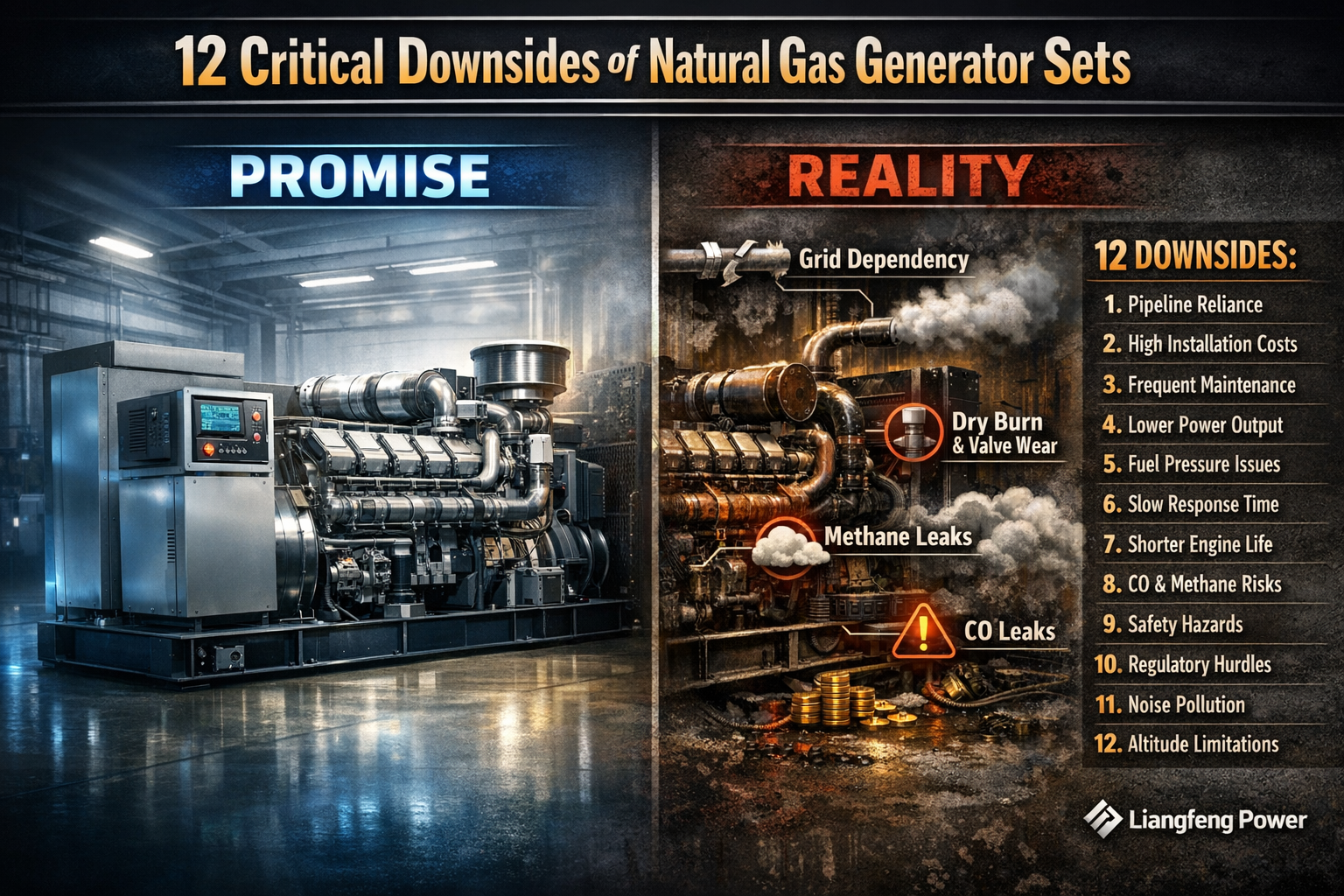
Energy reliability remains a fundamental pillar of modern civilization, yet the transition to cleaner power sources often overlooks the inherent physical trade-offs of the machinery involved. Human nature tends to favor the path of least resistance, leading many industrial buyers to assume that a gaseous fuel source is a flawless upgrade from traditional diesel. However, the psychological comfort of choosing "cleaner" energy often clashes with the harsh reality of mechanical limitations and infrastructure dependency. For a facility manager or business owner, the stress of a sudden power failure is compounded when they realize their backup system is tethered to a vulnerable municipal grid.
When evaluating the shift toward more sustainable backup solutions, procurement officers often encounter the China gas generator set as a prominent market option, yet the complexities of these systems extend far beyond the initial purchase price. The human brain is wired to prioritize immediate problem-solving, which frequently results in overlooking the long-term operational friction caused by fuel volatility and high-precision maintenance requirements. These hidden hurdles can transform a perceived energy solution into a significant logistical burden for unprepared enterprises.
The reality of industrial power generation is governed by the laws of thermodynamics rather than marketing promises. While the appeal of reduced carbon footprints is strong, the practical challenges of natural gas combustion, which include everything from slow transient responses to significant infrastructure costs, require a grounded, expert-level understanding. Navigating these downsides is not about dismissing the technology, but about aligning mechanical performance with the specific, high-stakes demands of a B2B environment where every second of downtime translates into measurable financial loss.
01. Infrastructure & Financial Barriers
1.1. Reliance on Municipal Pipeline Infrastructure
One of the most significant psychological traps for B2B buyers is the assumption that a natural gas pipeline is an infinite and indestructible fuel source. Unlike diesel or propane, which can be stored in physical tanks on-site, a natural gas generator is a "tethered" system. This reliance on municipal infrastructure introduces a single point of failure that is entirely outside the user's control.
During natural disasters, including earthquakes, severe floods, or even extreme deep freezes, utility companies often shut down gas lines to prevent massive fires or explosions caused by ruptured pipes. For an industrial facility, this means that at the very moment backup power is most desperately needed, the fuel supply might be cut off at the source. This external dependency negates one of the primary reasons for having a generator, which is to provide total energy independence during a crisis.
1.2. High Upfront Installation Costs
The financial barrier to entry for natural gas systems is considerably higher than for liquid-fuel counterparts. A typical industrial setup does not simply involve placing a unit on a concrete pad; it requires a complex integration of high-pressure plumbing, specialized regulators, and rigorous safety valving.
On average, a B2B buyer can expect a breakdown of $5,000 to $25,000 in setup fees alone. This cost encompasses:
- Gas Line Extension: Running high-volume pipes from the main municipal line to the generator location.
- Pressure Regulation: Installing industrial-grade regulators to ensure the engine receives a steady flow.
- Permitting: Professional engineering stamps and municipal inspections.
While the fuel itself might be cheaper per therm, the "payback period" for a natural gas unit is often stretched by years due to these massive initial capital expenditures (CAPEX).
1.3. Strict Regulatory & Permitting Requirements
Navigating the legal landscape of gas-powered machinery is a significant administrative burden. Because natural gas is highly flammable and pressurized, the permitting process is far more grueling than for a standard diesel unit. Fire departments often require specific setback distances from buildings, and environmental clearances must be obtained to ensure compliance with local methane emission standards.
The hassle of obtaining these clearances often involves multiple rounds of site inspections and structural adjustments. For a business looking for a quick power solution, the months-long wait for a fire department "OK" or a gas company "Meter Upgrade" can lead to missed deadlines and prolonged vulnerability to grid instability.
02. Operational & Performance Limitations
2.1. Lower Power Density Compared to Diesel
From a purely mechanical standpoint, natural gas does not pack the same "punch" as diesel. Diesel fuel has a much higher energy density per gallon than an equivalent volume of natural gas. Consequently, to produce the same kilowatt (kW) output, a natural gas engine must be significantly larger in physical size and displacement.
For B2B buyers with limited real estate, this is a major downside. A 500kW gas generator set will take up a much larger footprint than a 500kW diesel unit. This lower power density also means the engine has to work harder and run at higher RPMs or higher temperatures to maintain the same load, which contributes to the overall wear and tear of the internal components.
2.2. Performance Sensitivity to Fuel Quality & Pressure
Natural gas generators are "finicky" eaters. While a diesel engine can handle slight variations in fuel grade, a spark-ignited gas engine requires a very specific methane number and a consistent delivery pressure. If the municipal gas pressure drops, as it often happens during peak winter months when everyone in the city is running their heaters, then the generator may fail to start or may "hunt" for speed, causing unstable electrical frequency.
Poor gas quality, containing high levels of moisture or heavy hydrocarbons, can lead to "knocking" or pre-detonation within the cylinders. This is not just a performance issue; it is a mechanical catastrophe. Continuous knocking can shatter pistons and bend connecting rods, leading to a total engine failure in a matter of hours.
2.3. Slow Transient Response to Heavy Loads
In an industrial setting, machinery like large motors, compressors, or elevators creates "voltage spikes" when they start up. A generator must be able to sense this sudden load and react instantly. Natural gas engines are notoriously slow in this regard compared to the "brute force" response of a diesel engine.
Because the fuel-to-air ratio in a gas engine must be precisely controlled for combustion, there is a lag time between the load increase and the engine’s ability to ramp up power. This delay can cause sensitive electronic equipment to reboot or industrial motors to stall, defeating the purpose of a seamless backup power transition.
2.4. Efficiency Derating at High Altitudes
For businesses operating in mountainous regions or high-elevation plateaus, the performance of a natural gas generator drops significantly. As the air becomes thinner (less oxygen), the engine’s ability to burn the gas efficiently decreases.
While all internal combustion engines suffer from derating, gas units are particularly sensitive because they rely on a precise stoichiometric air-fuel mixture. At high altitudes, a B2B buyer might find that their 1000kW unit is only capable of producing 700kW or 800kW of usable power. This requires buyers to "over-spec" and purchase a much larger, more expensive unit than their actual load requires just to compensate for the thin air.
03. Maintenance, Safety, and Longevity Issues
3.1. Increased Maintenance Frequency
One of the most overlooked "hidden costs" is the maintenance schedule of spark-ignited systems. Unlike diesel engines which use compression ignition, natural gas units rely on spark plugs, ignition coils, and high-tension wires. These components are subjected to extreme heat and electrical stress.
The spark plugs in a high-capacity gas generator set have a much shorter life span than those in smaller applications. They require frequent gapping and replacement to prevent misfires. Additionally, the ignition timing must be checked regularly using specialized diagnostic tools to ensure the engine is running within its narrow "efficiency window."
3.2. Shorter Engine Lifespan
There is a common misconception that because natural gas burns "cleanly" (with less soot), the engine will last longer. In reality, the opposite is often true for industrial-grade units. Natural gas is a "dry" fuel. It lacks the natural lubricating properties found in diesel fuel.
This lack of lubrication leads to the "dry burn" effect, specifically on the intake and exhaust valves and their respective seats. Over time, the constant metal-on-metal contact at high temperatures causes "valve recession," where the valve literally sinks into the cylinder head. This leads to a loss of compression and necessitates an expensive top-end engine overhaul much sooner than a comparable diesel engine would require.
3.3. Hidden Safety Risks (Explosions & CO Leaks)
The safety profile of natural gas requires a much higher level of vigilance. Because the fuel is delivered via a pressurized pipe, any leak within the generator enclosure can lead to an accumulation of explosive gas. Unlike a diesel spill, which sits on the floor, a gas leak is often invisible and can be ignited by a single spark from the generator’s own starter motor.
Furthermore, Carbon Monoxide (CO) is a byproduct of incomplete combustion. Since CO is colorless and odorless, a leak in the exhaust system or a poorly ventilated room can be fatal to personnel before they even realize there is a problem. This necessitates the installation and constant maintenance of expensive gas detection and automatic shut-off systems.
04. Environmental & External Factors
4.1. Methane Slippage and GHG Emissions
Natural gas is frequently marketed as the "bridge fuel" to a green future because it emits less $CO_2$ than coal or oil. However, this narrative often ignores "methane slippage." Methane ($CH_4$), the primary component of natural gas, is a greenhouse gas that is over 25 times more potent than carbon dioxide at trapping heat in the atmosphere over a 100-year period.
During the start-up cycle or during periods of incomplete combustion, unburned methane can escape through the exhaust. For a B2B buyer focused on Environmental, Social, and Governance (ESG) goals, the "green" benefits of a gas generator may be offset by the high global warming potential of these methane leaks, making the environmental footprint more complex than it appears on paper.
4.2. Noise Pollution in Commercial Areas
While people often associate diesel engines with a deep "thumping" sound, large-capacity natural gas engines produce a high-frequency "whine" and constant mechanical vibration that can be equally disruptive. Because these units often run at higher sustained RPMs to maintain power output, the decibel levels can be quite high.
In commercial areas or near office buildings, this noise pollution requires the purchase of expensive acoustic enclosures or "sound-attenuated" housings. Without these, the constant roar of a high-capacity unit can lead to noise complaints from neighbors and potential fines from local municipalities.
|
Feature |
Natural Gas Generator |
Diesel Generator |
|
Fuel Storage |
Dependent on External Pipes |
On-site Tank (Independent) |
|
Response Time |
Slower (Sensitive to Load) |
Fast (Ideal for Spikes) |
|
Maintenance |
High (Spark Plugs/Valves) |
Moderate (Oil/Filters) |
|
Installation |
Expensive ($5k - $25k+) |
Moderate |
|
Lifespan |
Shorter (Dry Burn Effect) |
Longer (Lubricated Fuel) |
⚡ Strategic Procurement for Industrial Power
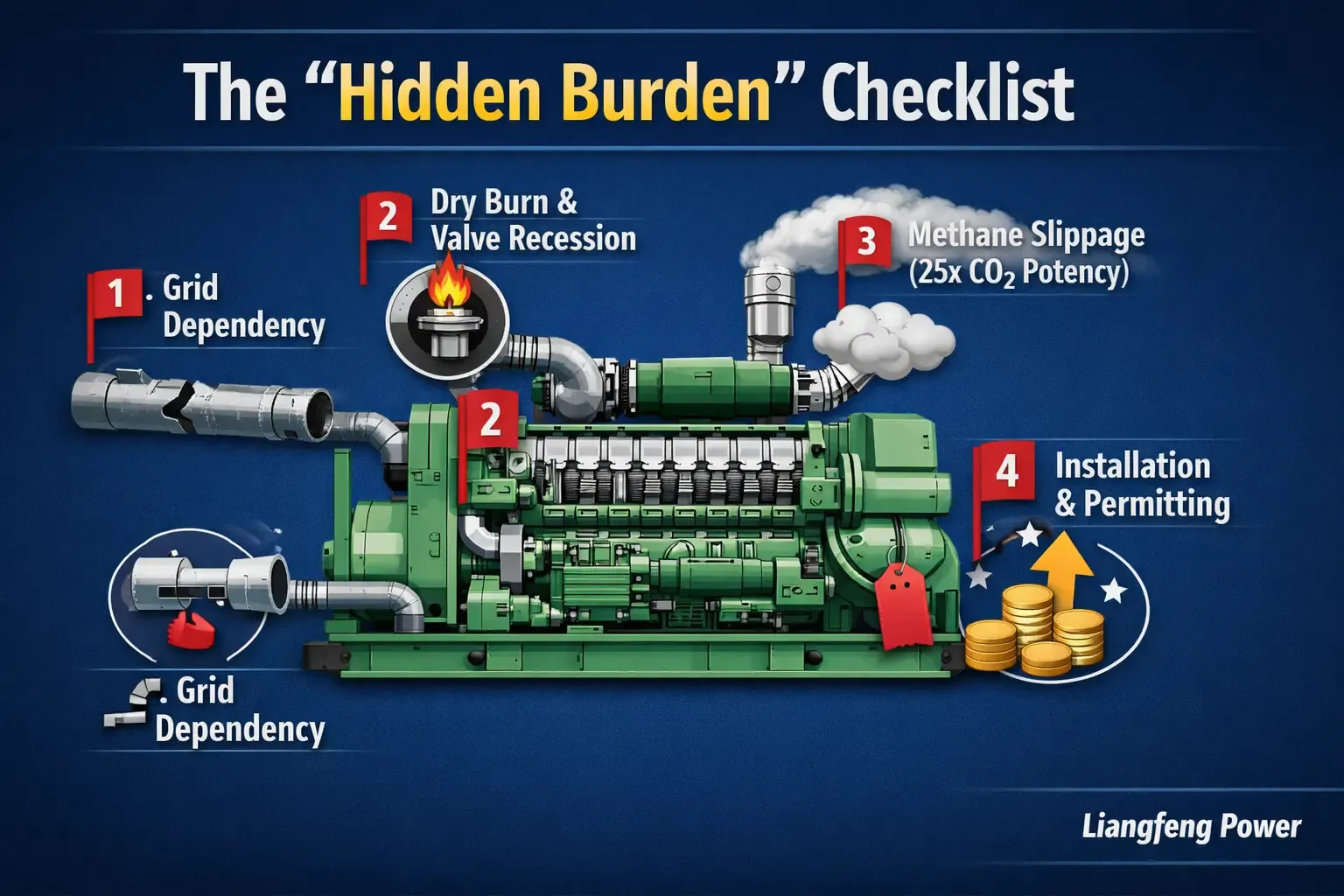
When navigating the complex landscape of high-output energy, understanding the mechanical limitations of your equipment is the first step toward operational resilience. Many organizations find that while gaseous fuel has its place, the robustness of traditional power systems remains unmatched for heavy-duty applications. For those looking to mitigate the risks discussed, it is vital to work with a reputable China generator set supplier that performs deep technical vetting of their combustion technology. To provide your facility with the highest grade of engineering support and equipment durability, you can explore the specialized industrial range offered by Liangfeng Power, a brand dedicated to bridging the gap between fuel efficiency and long-term mechanical reliability.
Conclusion
The decision to implement a natural gas power system involves a complex calculation that goes far beyond simple fuel costs. As we have explored, the challenges range from the high financial hurdles of initial installation and the bureaucratic maze of permitting to the physical realities of lower power density and the "dry burn" effect on engine longevity. The dependence on municipal pipelines creates a paradox where a backup system remains vulnerable to the very disasters it is meant to protect against.
Furthermore, the environmental and safety considerations, specifically methane slippage and the invisible threat of Carbon Monoxide, require a sophisticated management approach. While natural gas remains a viable part of the global energy mix, B2B buyers must weigh these twelve critical downsides against their specific operational needs. A successful power strategy is not one that follows the latest trend, but one that accounts for every mechanical, financial, and logistical friction point to ensure that when the lights go out, the power truly stays on.
Making a Decision That Actually Holds Up Under Load
None of the twelve points above are meant to discourage a gas installation outright, they are meant to give procurement teams a realistic picture before capital gets committed. The buyers who avoid the costliest surprises are usually the ones who ask hard questions about pipeline dependency, altitude derating, and valve maintenance schedules well before a unit is ordered, not after it is already running on-site. That kind of due diligence is far easier when the equipment itself comes with transparent engineering data and a manufacturer willing to walk through the trade-offs honestly.
This is the approach Liangfeng Power takes with every industrial client, pairing straightforward technical guidance with build quality that holds up under the exact conditions described in this article. For businesses weighing gas genset wholesale sourcing options, having a manufacturer that addresses these mechanical realities upfront, rather than glossing over them, tends to make the entire procurement process far less risky.
Featured Articles
A gas generator set loses roughly 3 to 4 percent of its rated electrical output for every 1,000 f
READ FULLA supplier quotes 100 kVA standby and 90 kVA prime on what turns out to be the exact same engine
READ FULLGetting the sizing wrong on a generator set is one
READ FULL